Quantum Processes and Computation
Lecture 1
Aleks Kissinger | Oxford HT 2026

Introduction
Karma police, arrest this man. He talks in maths.
- Radiohead, "Karma Police", Oxford, 1997.
Quantum theory: the standard line
- Quantum theory governs the behaviour of the microscopic world
- You've probably heard from credible sources1 that it is weird, spooky, and defies our natural, classical intuitions.
- True, it has some "bugs" from the p.o.v. of classical physics:
- irreducible non-determinism
- non-locality
- incompatible observations
- ...
- A century of effort went to answering:
Why is quantum theory so weird, and can we fix its bugs?
1 e.g. 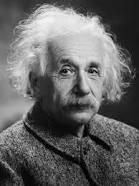
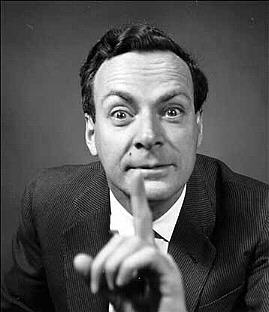
This produced (basically) two answers

|
|
|
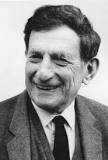
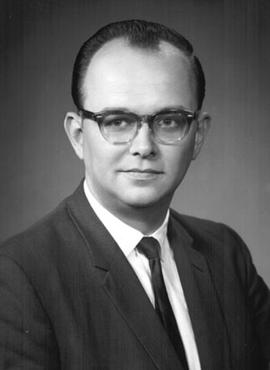
| Make even weirder ontology | "Shut up and calculate!" | |
|

|
|
| (e.g. Bohmian mechanics, many worlds, ...) | (Mermin, describing the Copenhagen interpretation) |
Another, more interesting question
- In the 1980s, a handful of people started to think like software engineers, and ask:
What if the bugs in quantum theory are actually features?
- Enter:

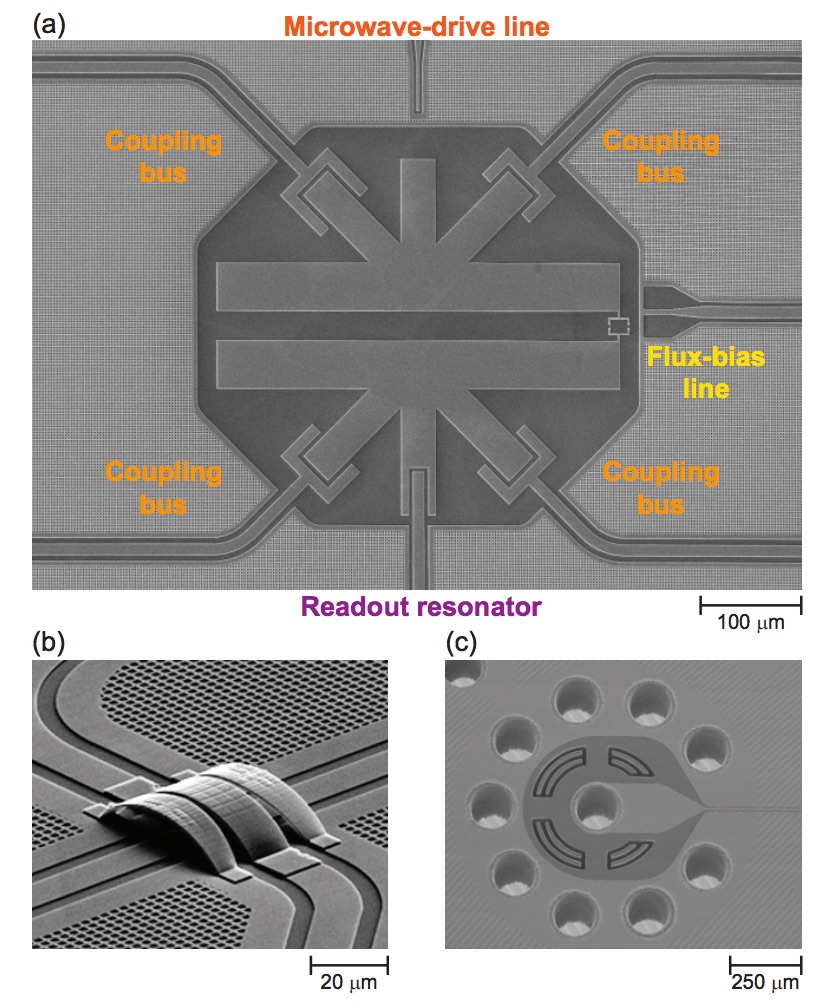
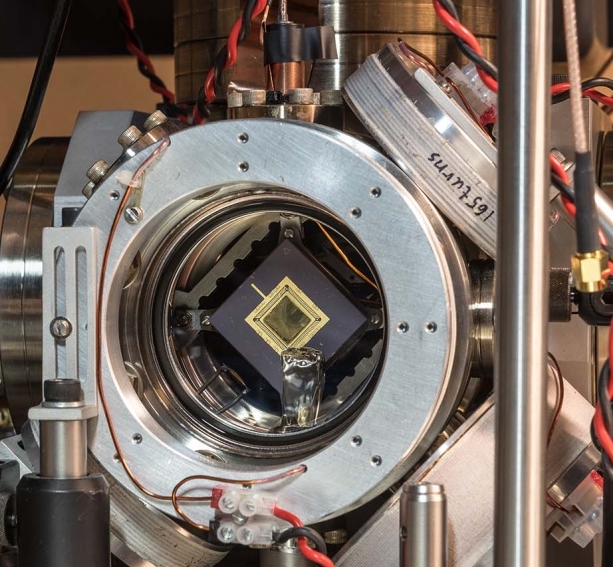
quantum teleportation, communication, cryptography quantum computation
From QT to teleportation
 |
$\Rightarrow$ | 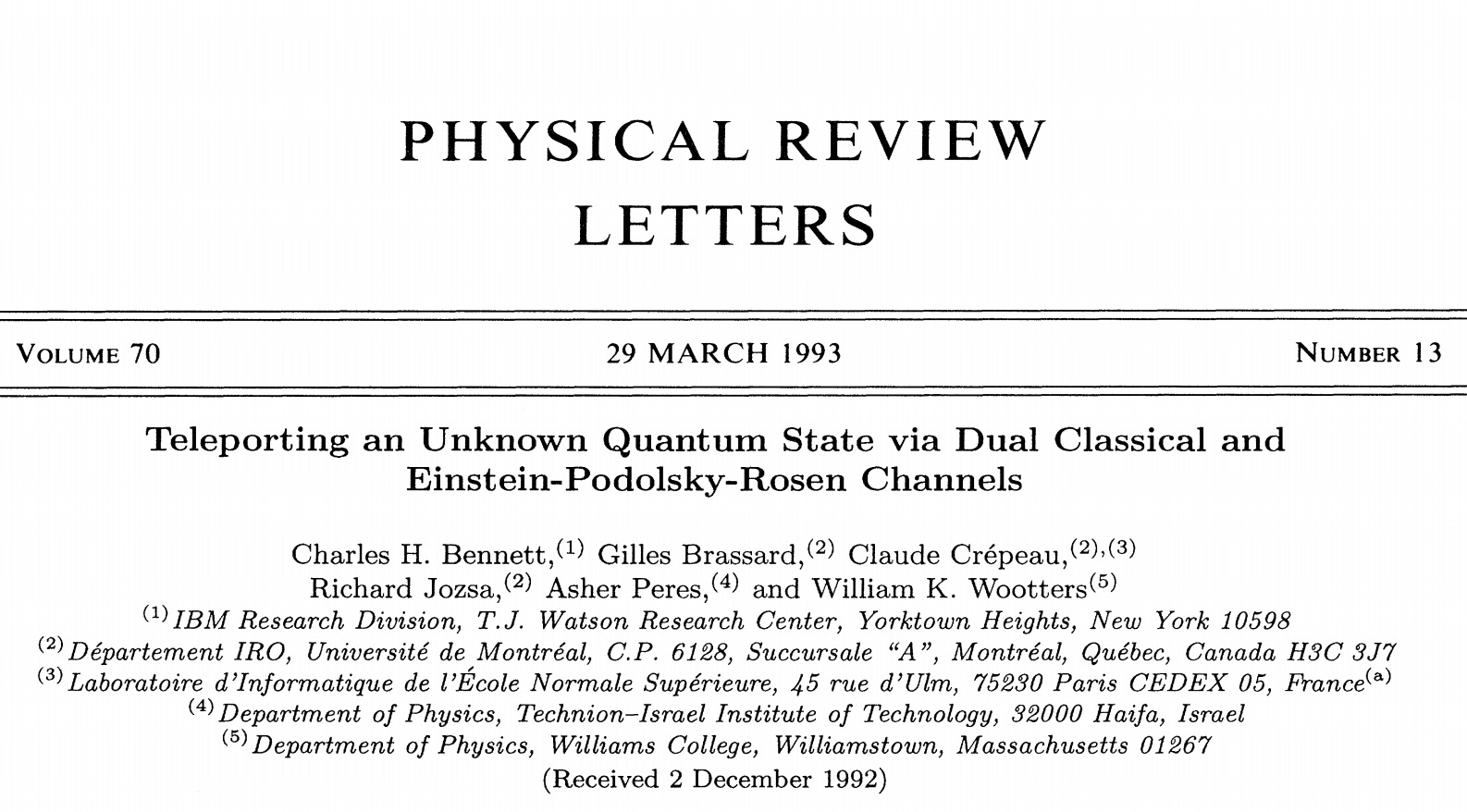 |
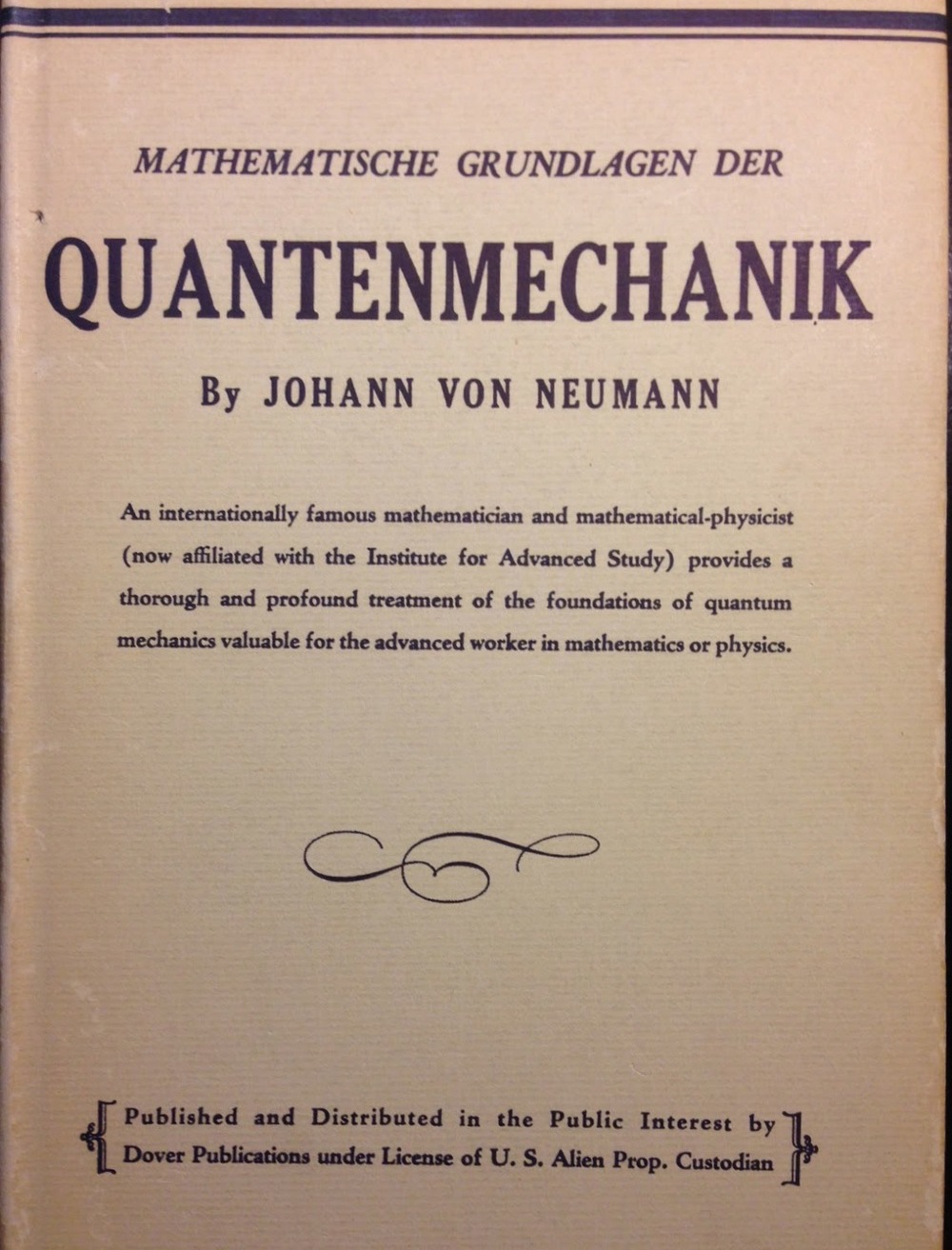
| 1932 - quantum theory | 1992 - quantum teleportation |
We'll see that teleportation is miraculous...but it's also totally obvious when formulated the right way.
From QT to teleportation
Q: Why did it take so long?
A: It took 60 years to ask the right question.
Q2: Why is this so hard?
A2: QT needs a better language.
Low-level vs. high-level languages
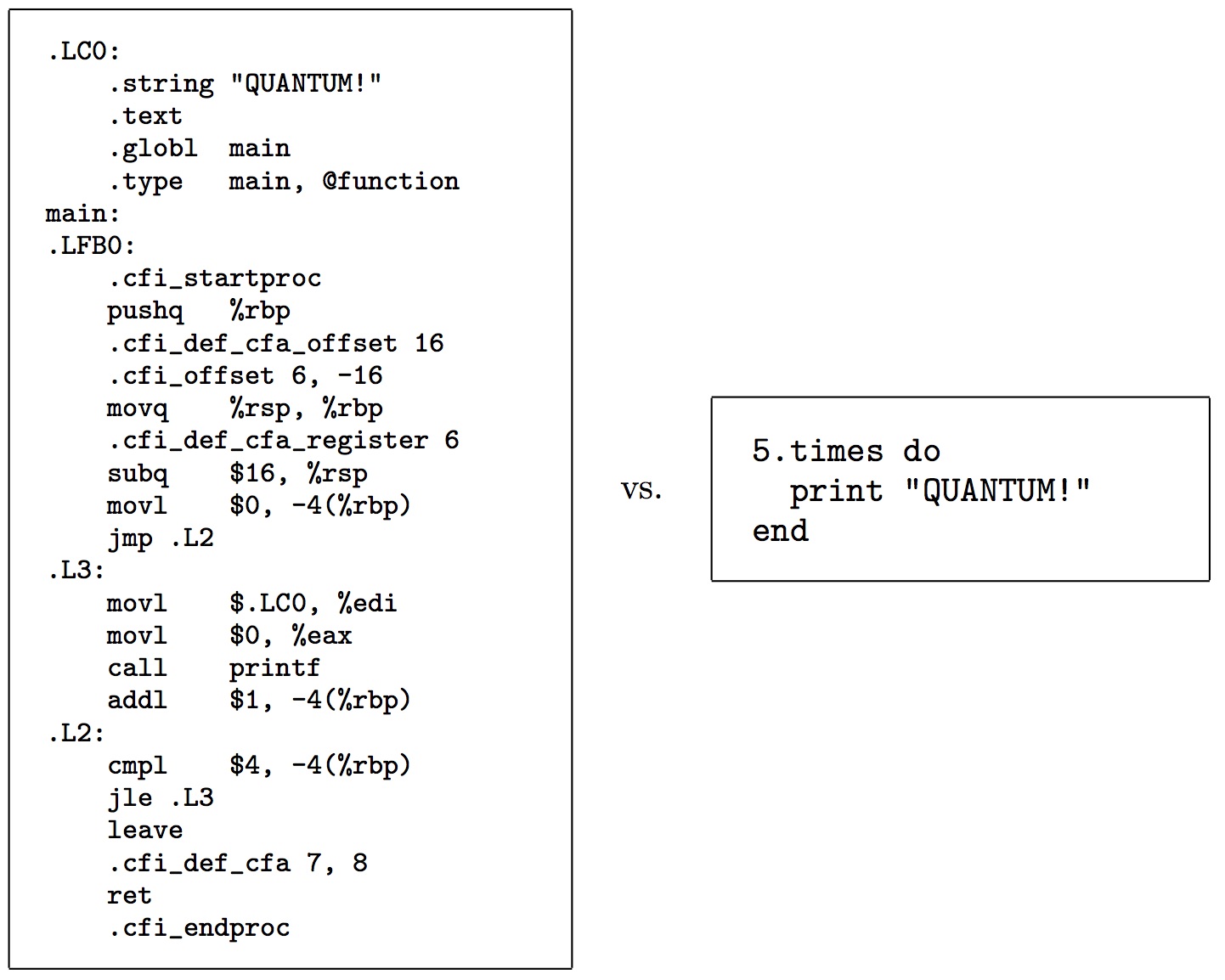
Low-level vs. high-level languages
$\frac{1}{4} \left( \begin{array}{rrrrrrrr} \!-\!1\!+\!i & 1\!+\!i & 1\!+\!i & \!-\!1\!+\!i & 1\!+\!i & 1\!-\!i & 1\!-\!i & 1\!+\!i \\ 1\!+\!i & 1\!-\!i & 1\!-\!i & 1\!+\!i & \!-\!1\!+\!i & 1\!+\!i & 1\!+\!i & \!-\!1\!+\!i \\ 1\!+\!i & 1\!-\!i & 1\!-\!i & 1\!+\!i & 1\!-\!i & \!-\!1\!-\!i & \!-\!1\!-\!i & 1\!-\!i \\ 1\!-\!i & \!-\!1\!-\!i & \!-\!1\!-\!i & 1\!-\!i & 1\!+\!i & 1\!-\!i & 1\!-\!i & 1\!+\!i \\ 1\!+\!i & 1\!-\!i & 1\!-\!i & 1\!+\!i & 1\!-\!i & \!-\!1\!-\!i & \!-\!1\!-\!i & 1\!-\!i \\ 1\!-\!i & \!-\!1\!-\!i & \!-\!1\!-\!i & 1\!-\!i & 1\!+\!i & 1\!-\!i & 1\!-\!i & 1\!+\!i \\ \!-\!1\!+\!i & 1\!+\!i & 1\!+\!i & \!-\!1\!+\!i & 1\!+\!i & 1\!-\!i & 1\!-\!i & 1\!+\!i \\ 1\!+\!i & 1\!-\!i & 1\!-\!i & 1\!+\!i & \!-\!1\!+\!i & 1\!+\!i & 1\!+\!i & \!-\!1\!+\!i \end{array} \right)$ vs.
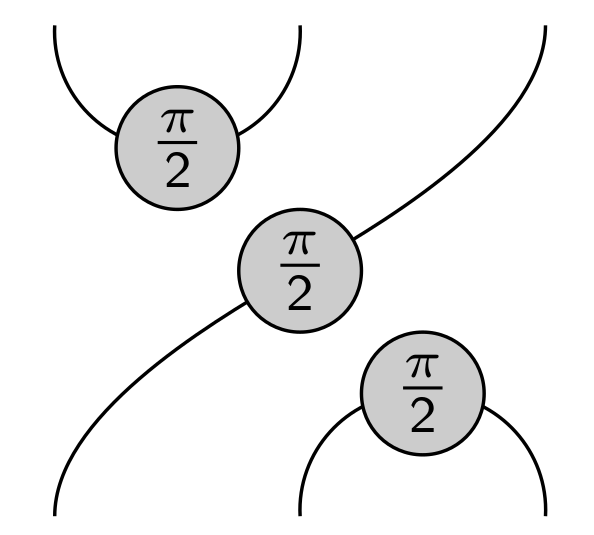
Quantum picturalism
Quantum picturalism $:=$ the use of diagrams to represent, reason about, and capture essential features and logic of interacting quantum processes.

The Plan
- Introduce the basics of quantum theory, computation, and qubits (some overlap with Quantum Information in the first 1-2 weeks, but from a complementary PoV),
- Learn how to work with quantum processes using diagrams,
- Identify the main challenges in quantum software development (verification, optimisation, error correction),
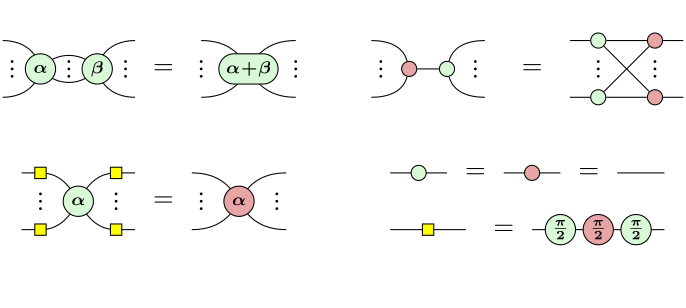
- Learn SotA techniques in quantum software using a graphical language called the ZX-calculus.
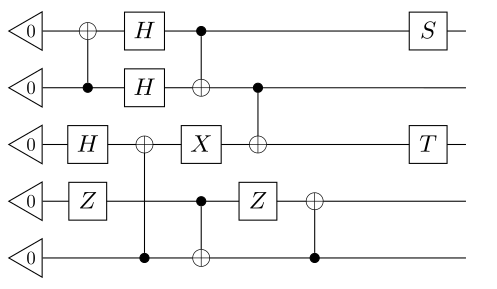
Warmup: Quantum circuits
:= the "assembly language of quantum computation"
|
INIT 5 CNOT 1 0 H 2 Z 3 H 0 H 1 CNOT 4 2 ... |
↔ |  |
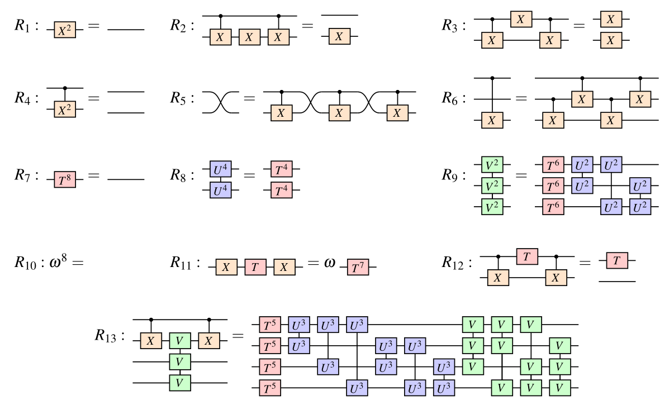
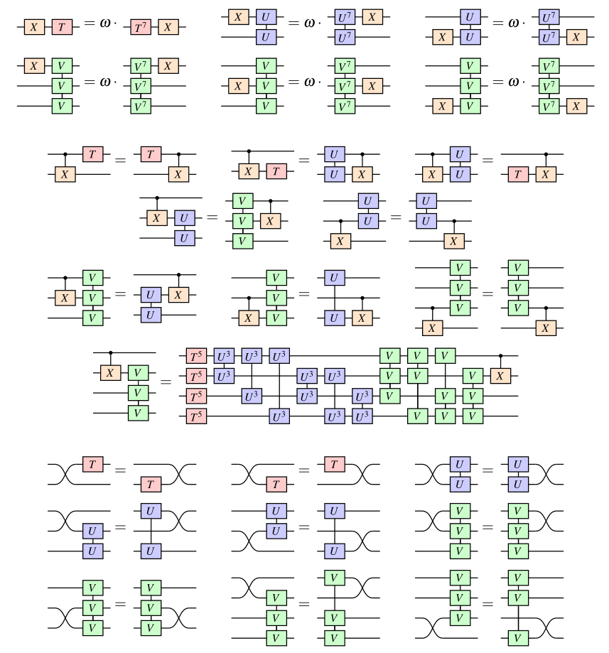
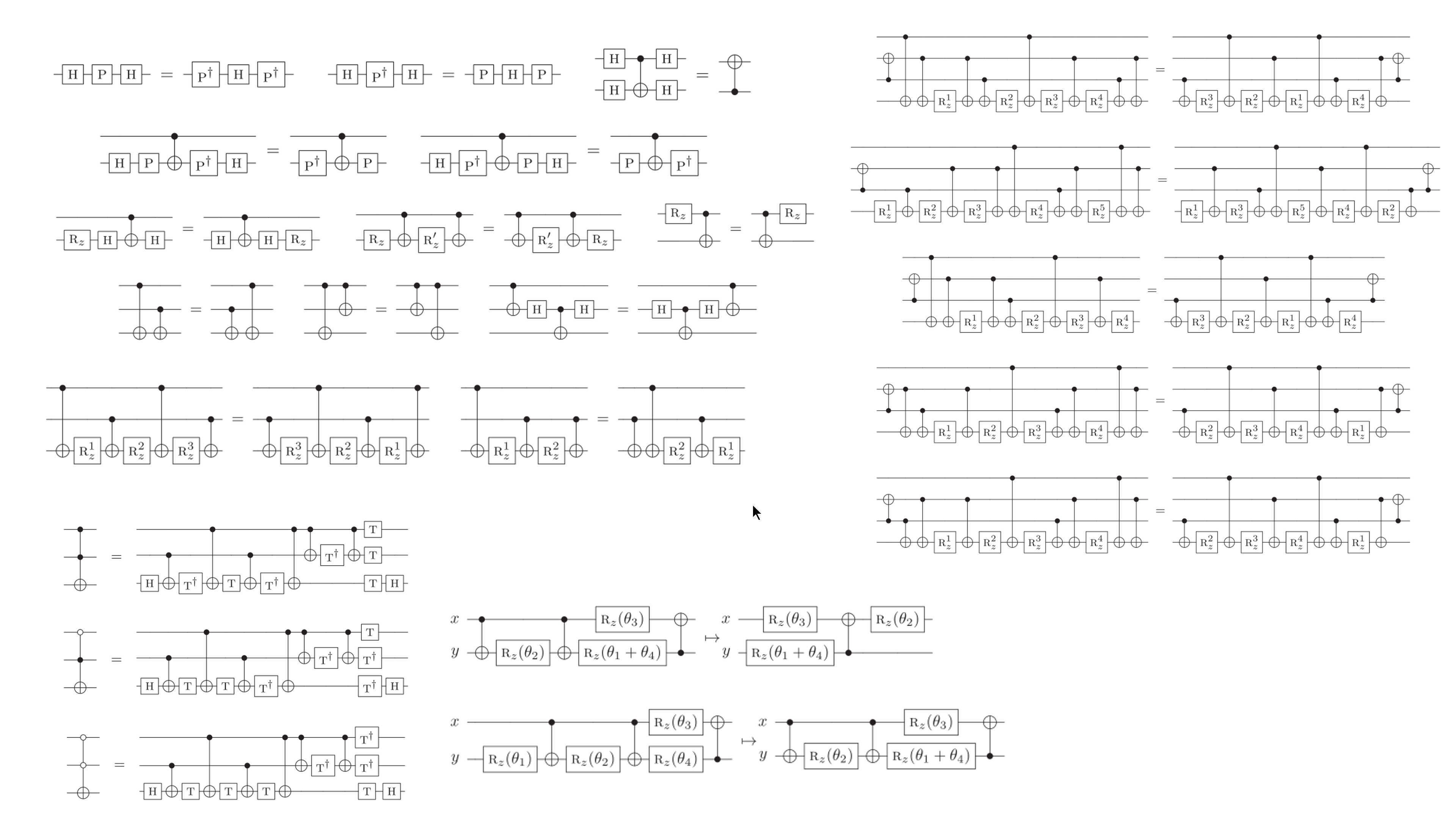
Optimising circuits the old-fashioned way

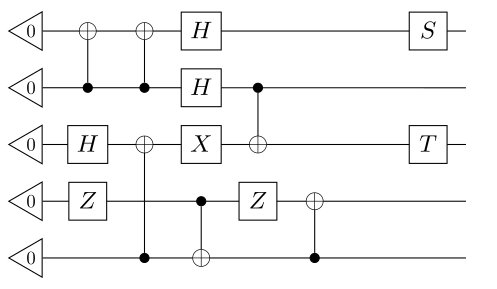
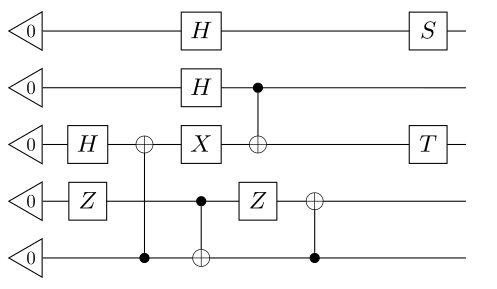
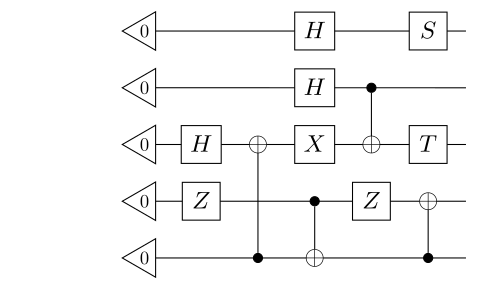
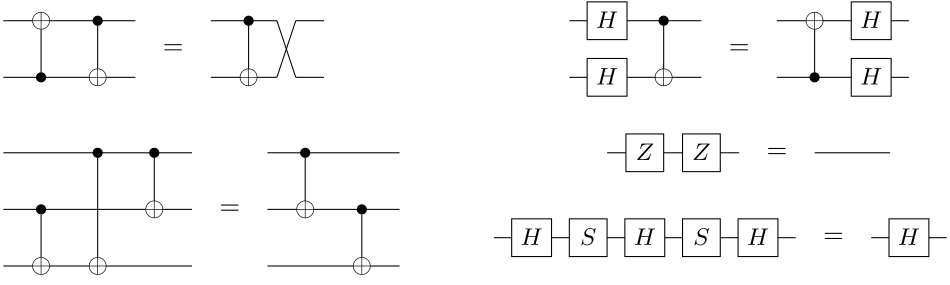
...
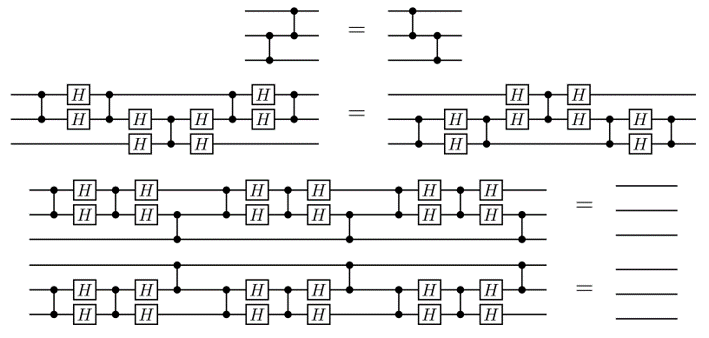
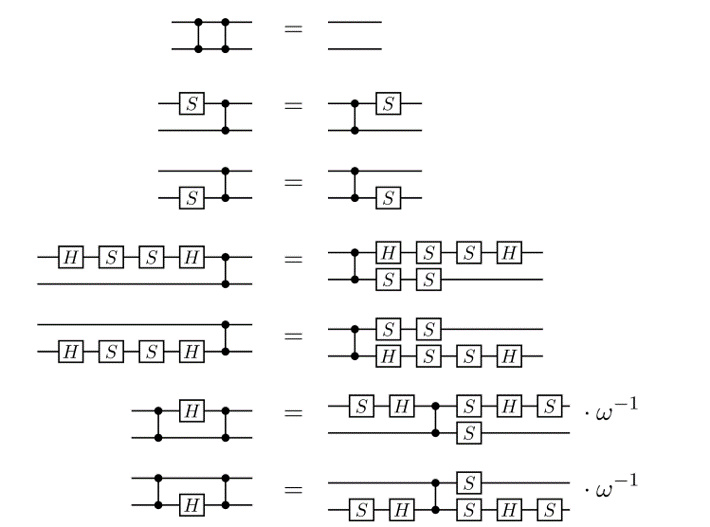
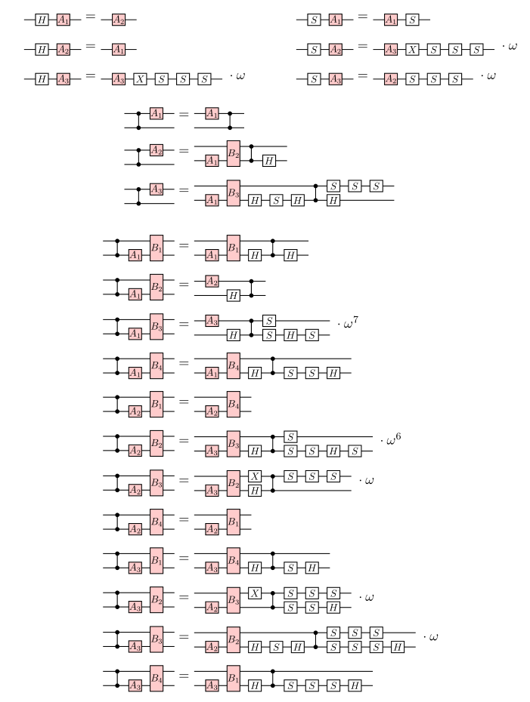
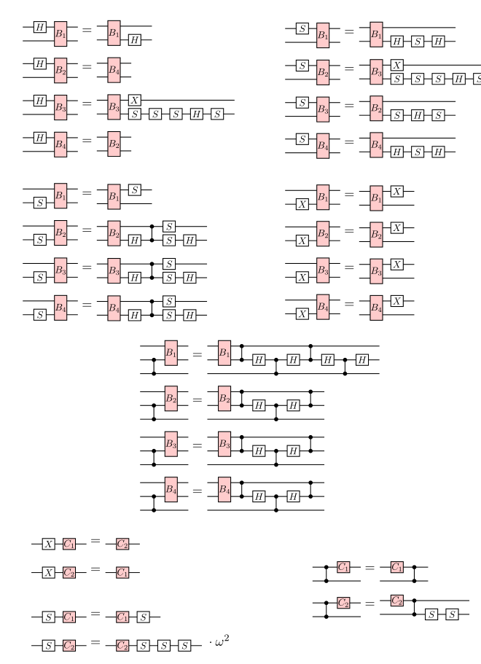
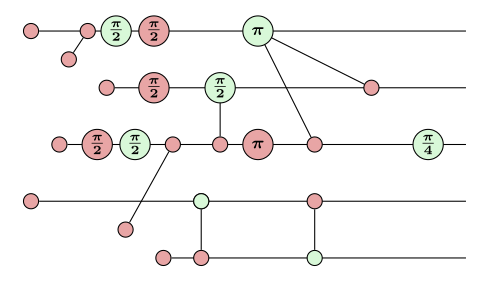
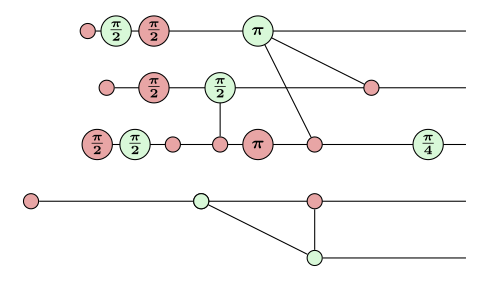
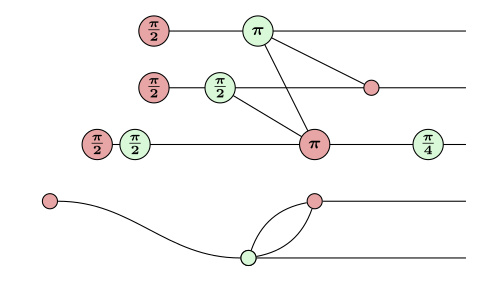
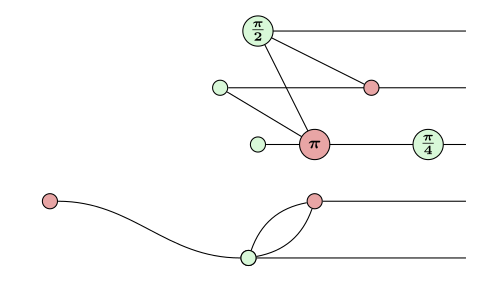
A better idea: the ZX calculus
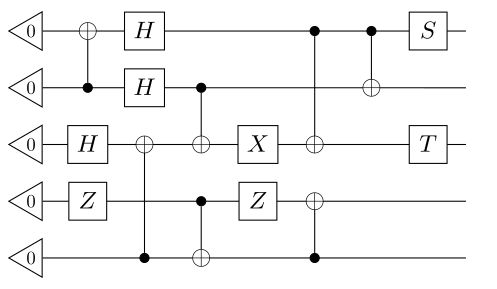
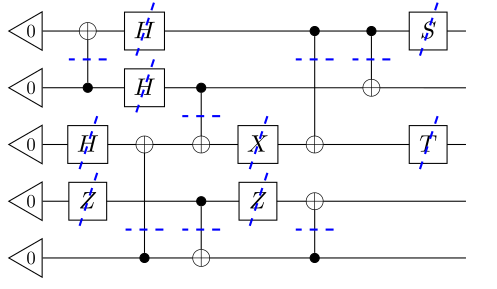
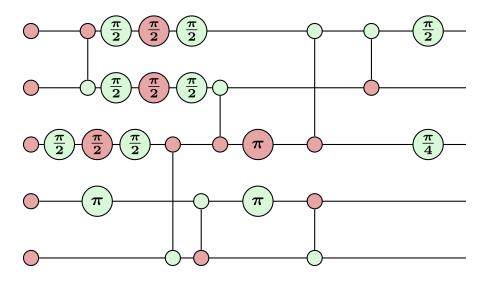
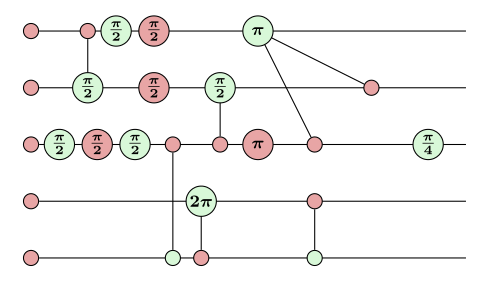
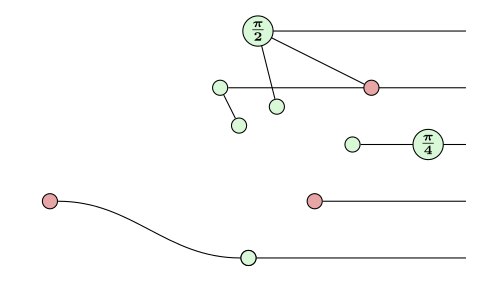
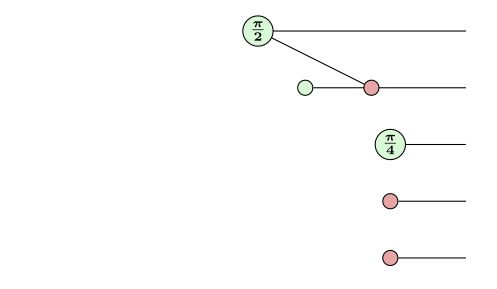
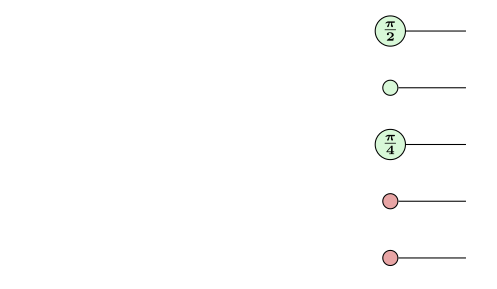
Format
- All material is on the website:
- 24, 60-min lectures (by Aleks Kissinger and Andrey Khesin)
- Classes in weeks 3-8
- Exam by miniproject
- Combination of exercise-sheet style and more open-ended problems, possibly some coding.
Format
 |
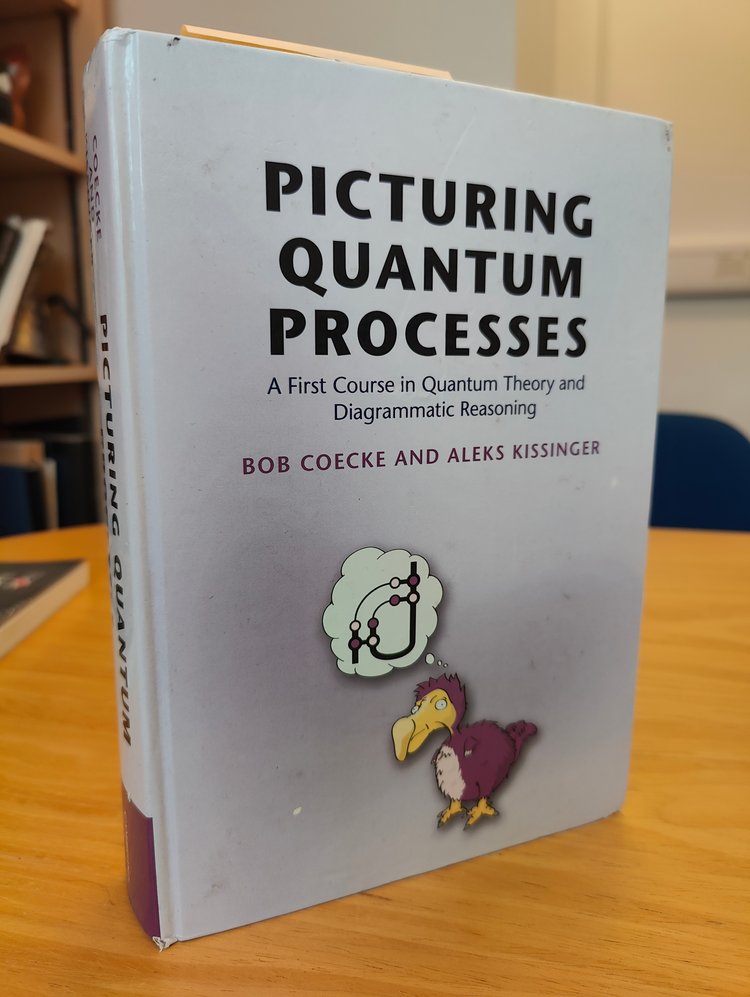 |
| Main course text | Optional extra reading |
| github.com/zxcalc/book | (E-)Book from Library |