Fault-tolerance by construction
Aleks Kissinger
Fault-tolerant Quantum Technologies, Benasque 2026

Joint work with: Benjamin Rodatz, Boldiszár Poór, Linnea Grans-Samuelsson, Andrey Khesin, Sarah Meng Li, John van de Wetering, Richie Yeung, Max Schweikart, Max Rüsch
ZX-calculus
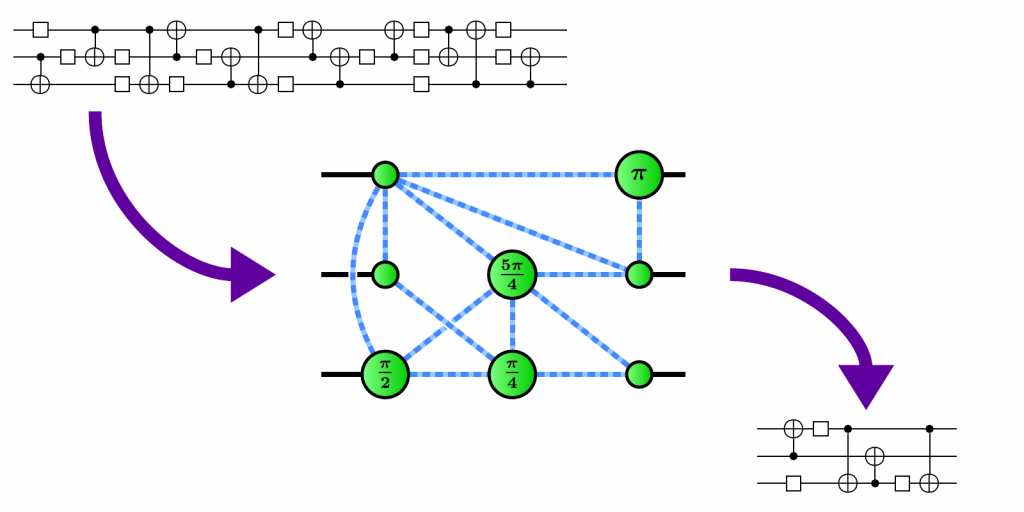
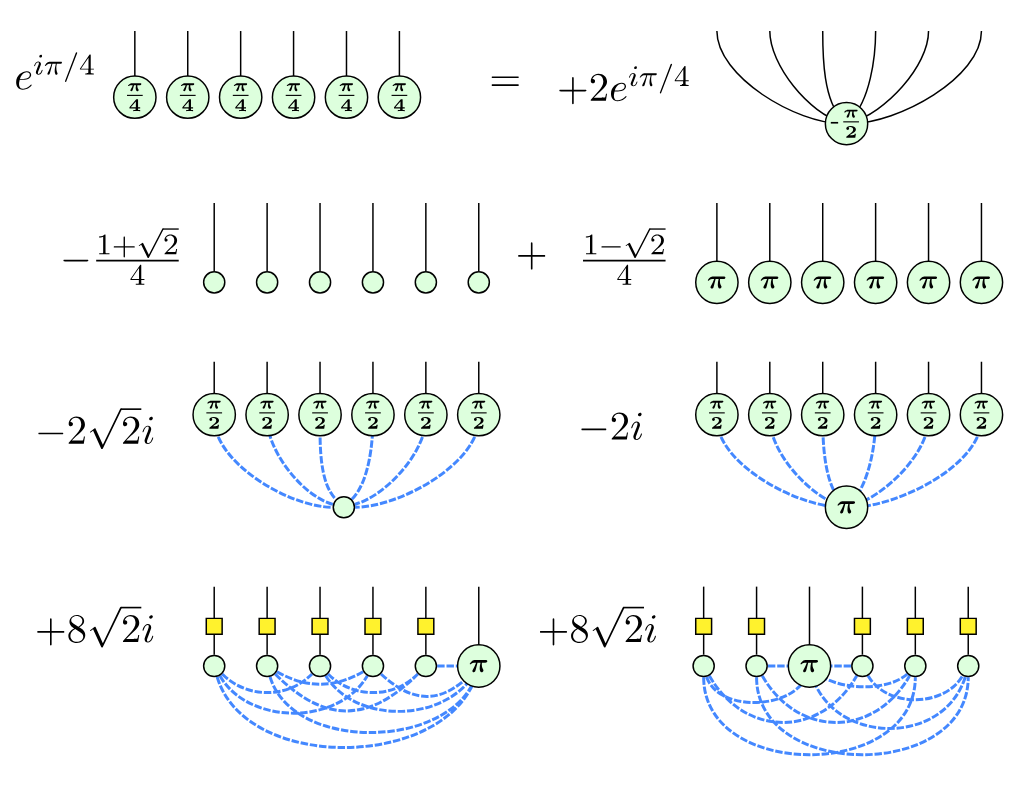
ZX := a handy tool for working with quantum
computations using graph rewriting
 |
 |
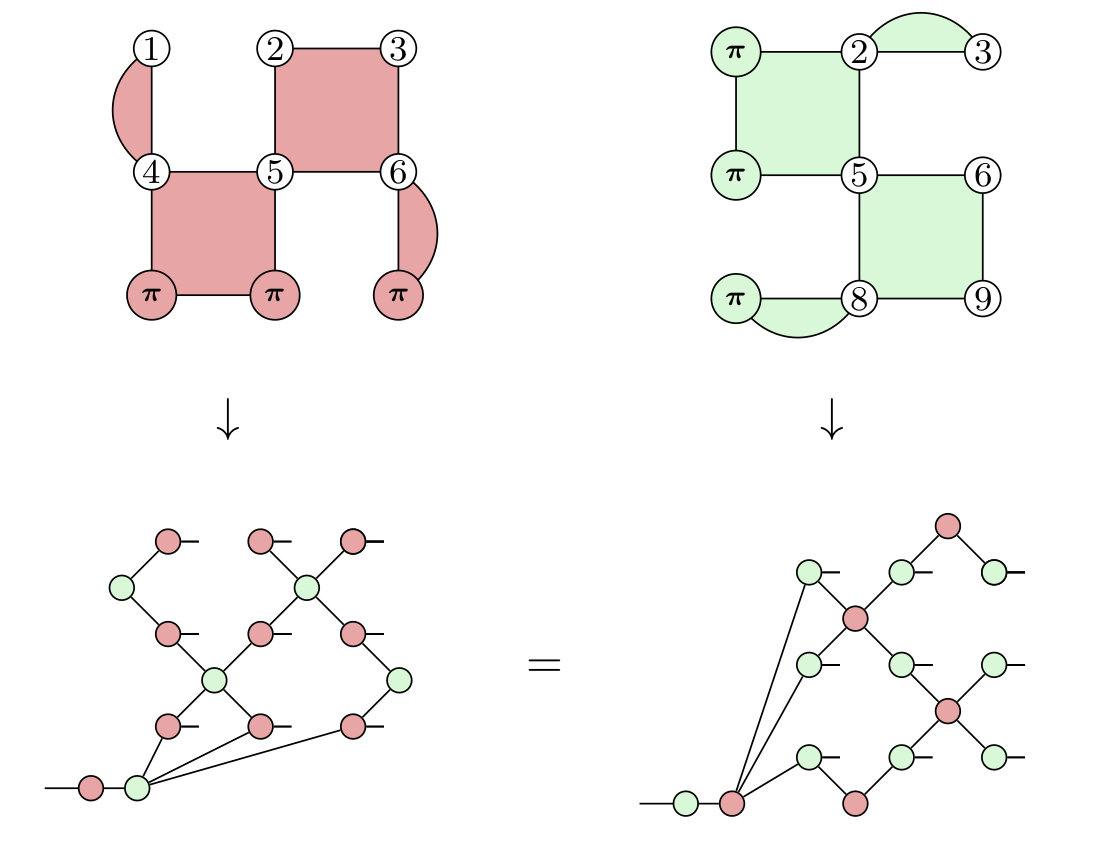 |
| Optimisation | Simulation & Verification | Error Correction |
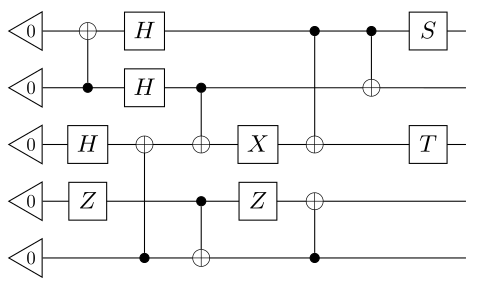
Optimising circuits the old-fashioned way

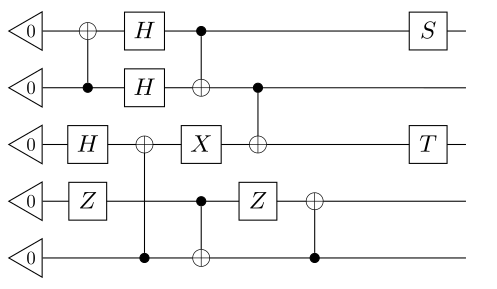
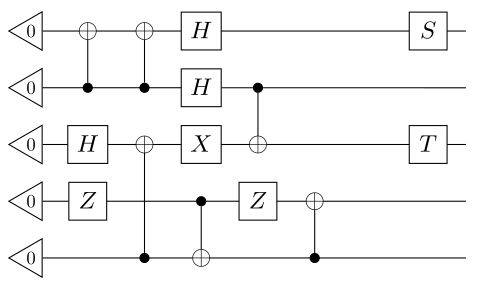
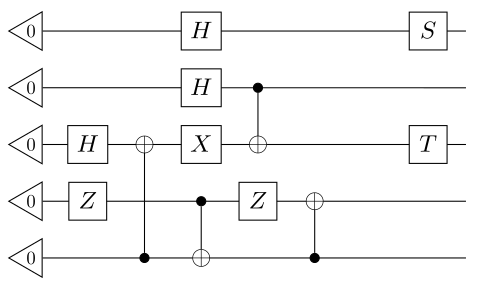
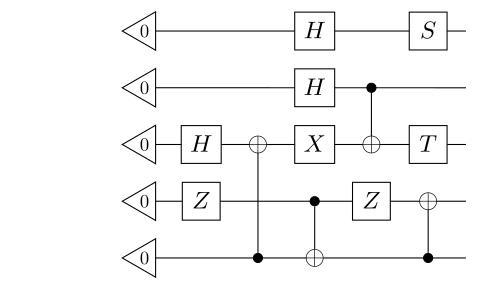
A better idea: decompose a circuit into a ZX diagram
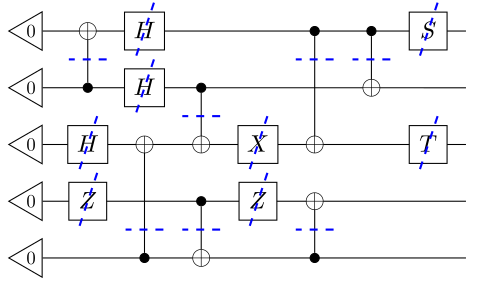
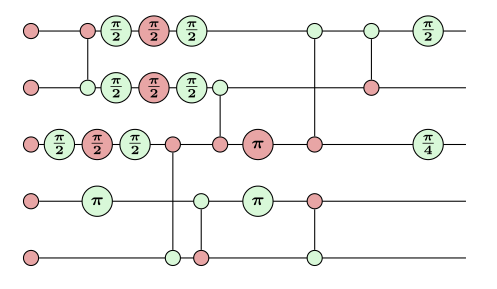
ZX diagrams
- Gates are represented using more basic building blocks, called spiders:
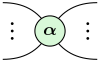
$:=$ $\ \ |0...0\rangle\langle 0...0| + e^{i \alpha} |1...1\rangle\langle 1...1|$ 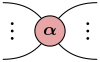
$:=$ $\ \ |{+}...{+}\rangle\langle {+}...{+}| + e^{i \alpha} |{-}...{-}\rangle\langle {-}...{-}|$ - E.g.
$\textit{CNOT} :=$
 $\sqrt{X} :=$
  $Z_\alpha :=$
- Wire order doesn't matter $\Rightarrow$ treat ZX-diagrams as undirected graphs
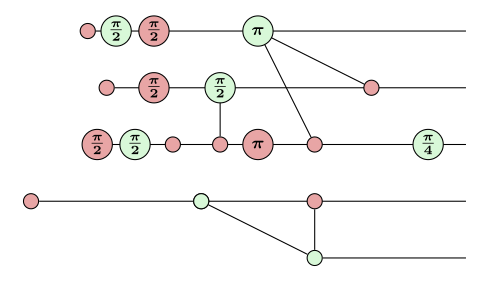
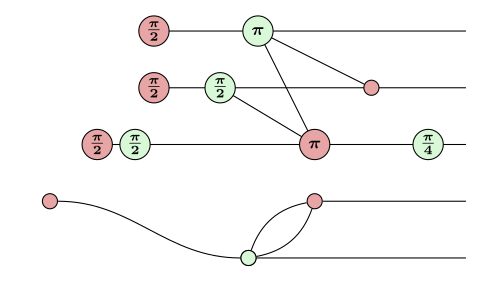
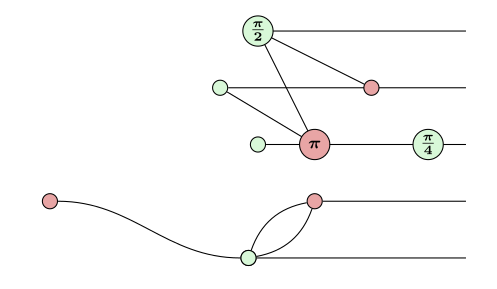
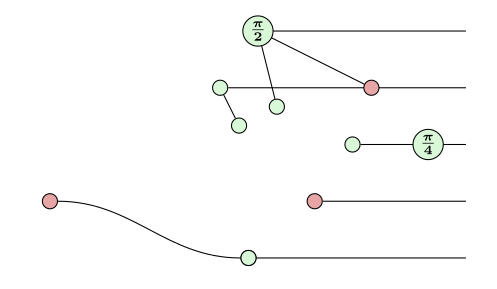
...then use the ZX calculus
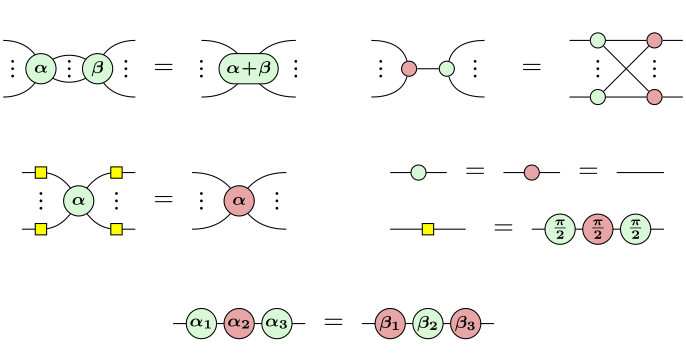
A complete set of equations for qubit QC
Clifford ZX calculus
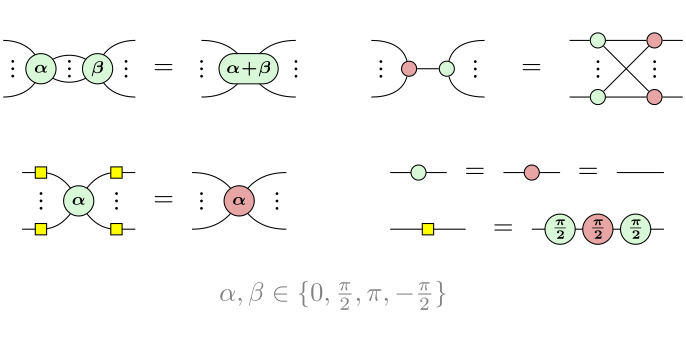
A complete set of equations for qubit Clifford QC
efficient synthesis, equality checking, classical simulation, ...
$\approx$ "graphical stabiliser theory"
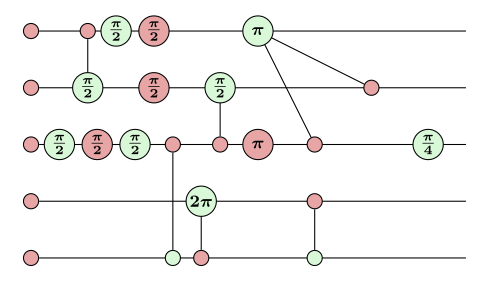
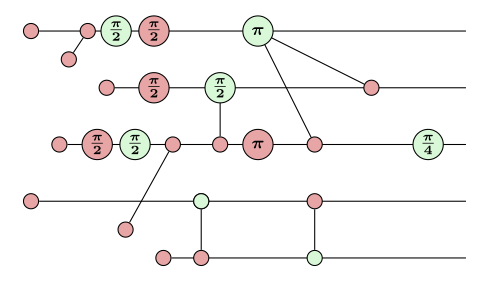
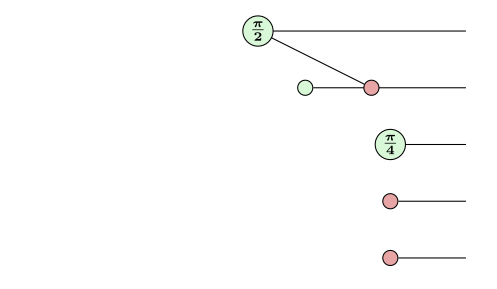
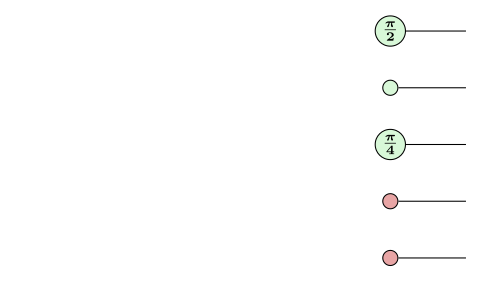
PyZX
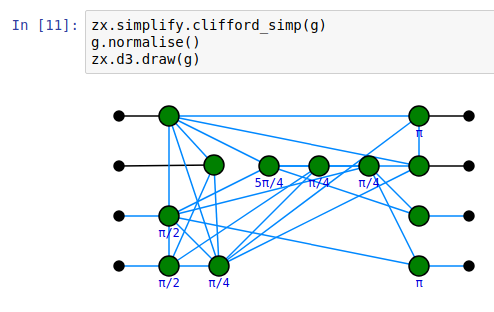
- Open source Python library for circuit optimisation, experimentation, and education using ZX-calculus
https://github.com/zxcalc/pyzx
QuiZX

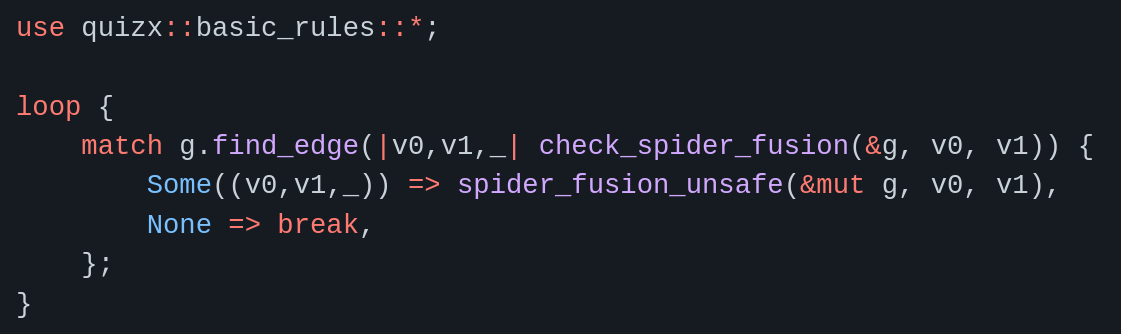
- Large scale circuit optimisation and classical simulation library for ZX-calculus
https://github.com/zxcalc/quizx
ZXLive
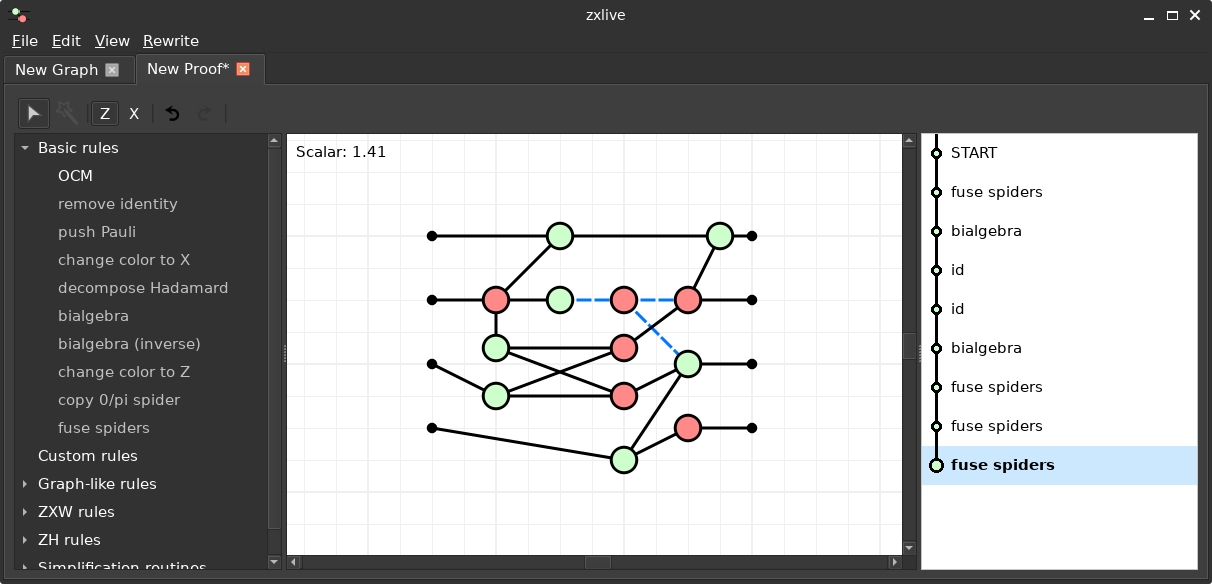
- GUI tool based on PyZX
https://github.com/zxcalc/zxlive
Paritea
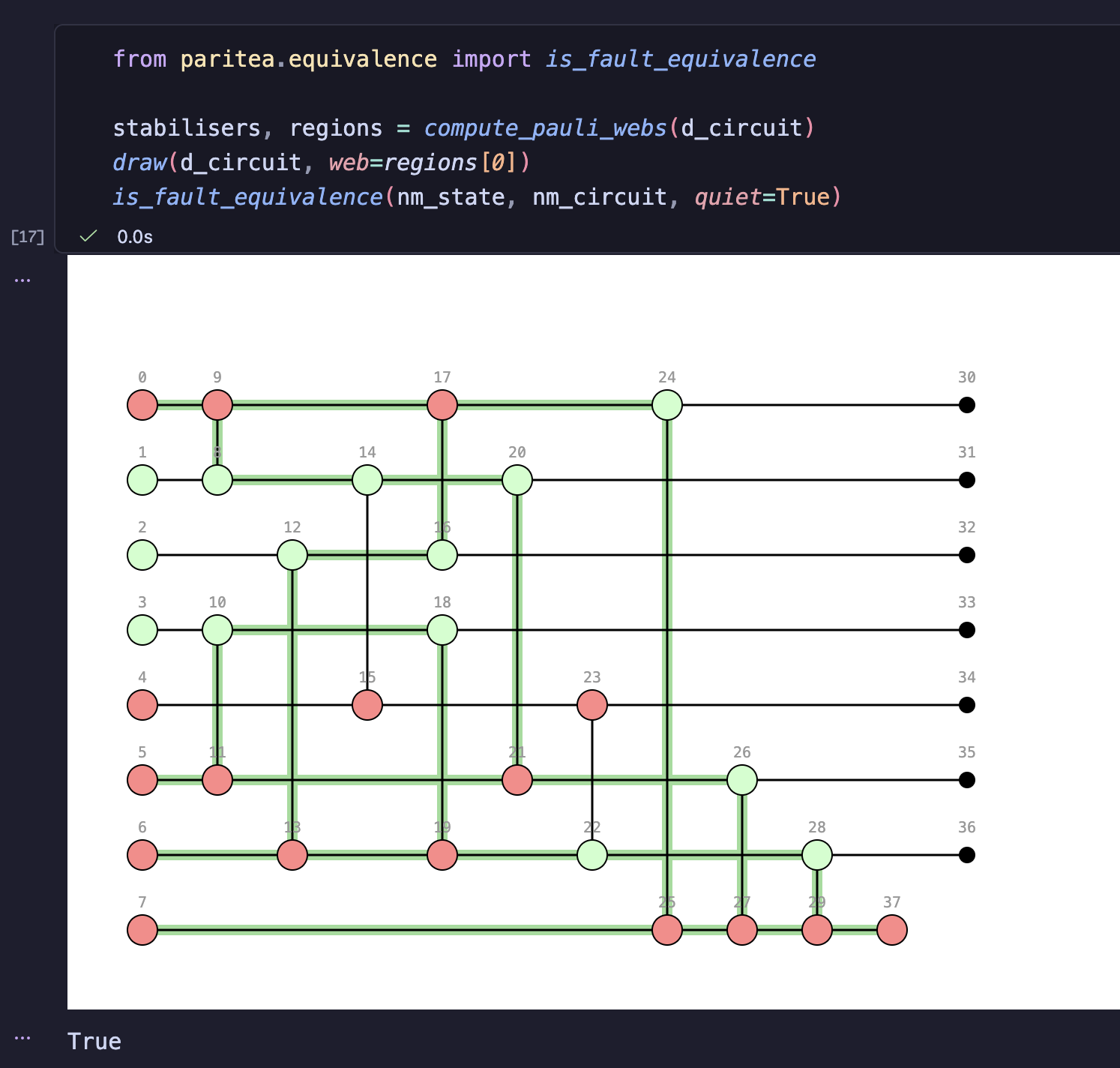
FT Simulation/Rewriting Utilities: github.com/paritea/paritea
Quantum error correction
into a bigger space of physical qubits:
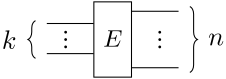
- $E$ (or just $\textrm{Im}(E)$) defines a quantum error correcting code
- Fault-tolerant quantum computing (FTQC) requires methods for:
- encoding/decoding logical states and measurements
- measuring physical qubits to detect/correct errors
- doing fault-tolerant computations on encoded qubits
QEC in ZX 101...
Quantum Gates
$CNOT =$
$CZ =$  $H =$
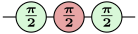
$H =$  $:=$
$:=$ 
$R_Z[\alpha] =$
$R_X[\alpha] =$ 
Quantum Measurements
$|k\rangle\langle k| \propto$ 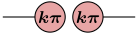
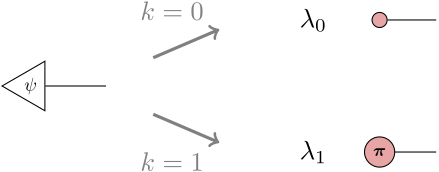
...collapse the quantum state to a fixed one,
depending on the outcome $k \in \{0,1\}$:

Multi-qubit measurements
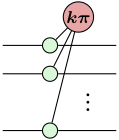
$k = 0$
$\Rightarrow$
$+1$ eigenspace of $Z \otimes \ldots \otimes Z$
$k = 1$
$\Rightarrow$
$-1$ eigenspace of $Z \otimes \ldots \otimes Z$
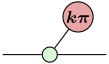 $\propto$
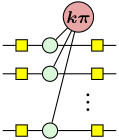
Multi-qubit measurements
Any other multi-qubit measurement can be obtained by conjugating with local Cliffords, e.g.
 $=$
$=$
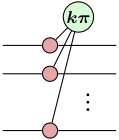
Modelling errors
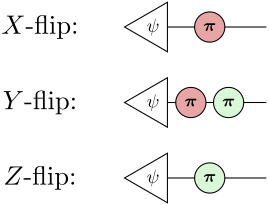
Pauli errors are modelled by introducing X, Y, or Z
flips on edges in a ZX-diagram:
Modelling errors
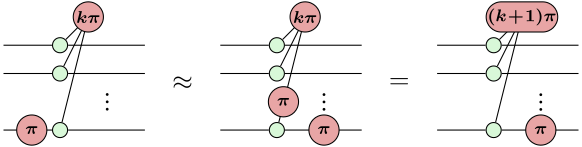
Anti-commuting errors flip measurement outcomes:
Example: GHZ code
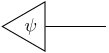 $\leadsto$

Example: GHZ code

Example: GHZ code

giving an error syndrome.
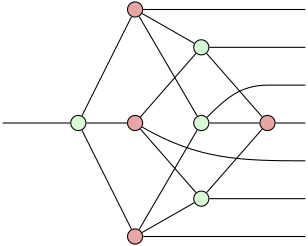
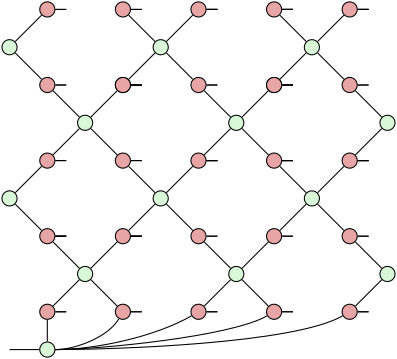
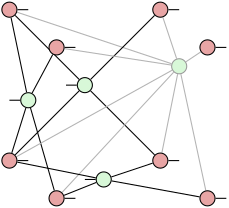
Graphical encoders
...give us a simple dictionary between QEC codes and ZX-diagrams, e.g. the GHZ code can be fully represented as:

Example: Steane code
Example: Surface code
Example: [[8, 3, 2]] Colour code
Fault-tolerant computation
But codes are only half the story in FTQC. We also need to know how to implement operations fault-tolerantly.
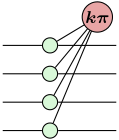
How can we implement this?
Example: measurement circuits
ZX can give us an answer:
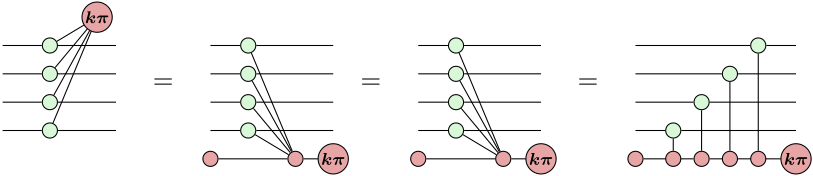
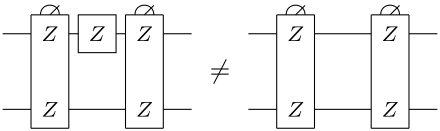
Q: Is the LHS really equivalent to the RHS?
A: It depends on what "equivalent" means.
Example: measurement circuits
They both give the same linear map, i.e. the behave the same in the absence of errors.

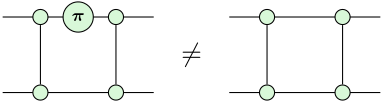
But they behave differently in the presence of errors, e.g.

Solution: Fault equivalence
What we need is a notion of equivalence that captures the behaviour of circuits (or ZX-diagrams) in the presence of errors, fault-equivalence:
$D \ \hat{=}\ E$
$D\ \hat{=}\ E \implies D = E$
$D = E \ \ \not\!\!\!\implies D\ \hat{=}\ E$
Error locations
Similar to space-time codes, we can model faults by tracking their locations in a circuit or ZX-diagram.
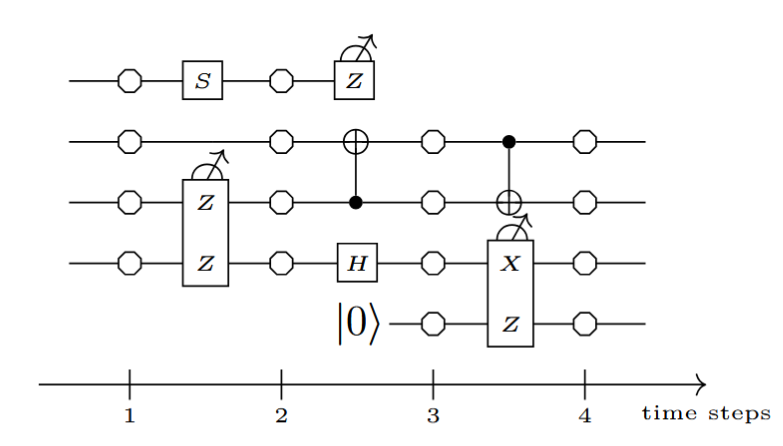
we allow them at any edge in the diagram:
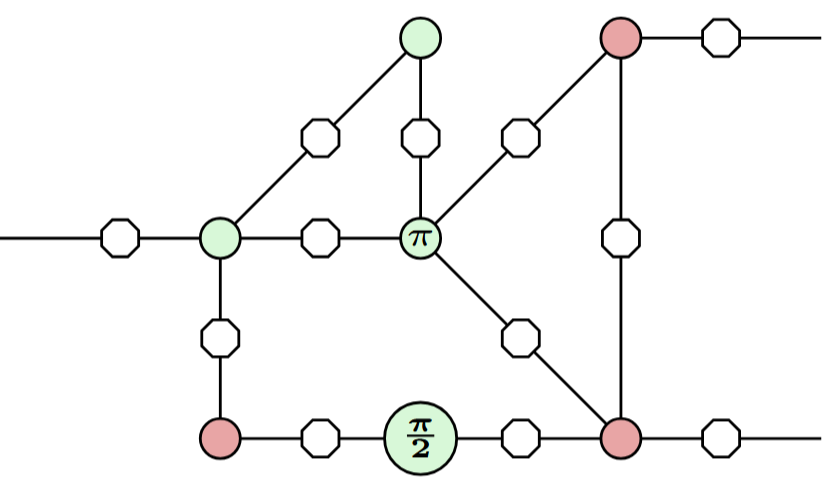
Applying a Pauli to a Circuit/Diagram
- For a circuit/diagram with a set $\mathcal L$ of fault locations, a fault is a Pauli
$F \in \mathcal P^{|\mathcal L|}$
- We can apply any Pauli $F \in \mathcal P^{|\mathcal L|}$ to a diagram $D$ by plugging it in, to make a linear map $D[F]$
- convention: interpret measurements as projection onto $+1$, and assume $D[I] \neq 0$
- There are 3 possibilities...
$F$ does nothing
$D[F] = D[I]$
i.e. it is a gauge of the diagram
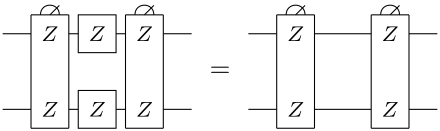
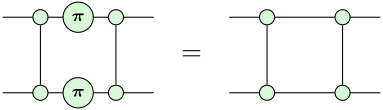
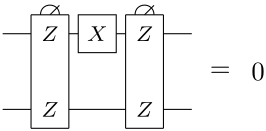
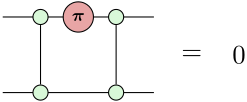
$F$ is detectable
$D[F] = 0$
$F$ is undetectable
$D[F] \neq 0$ and $D[F] \neq D[I]$
Pauli error models
- A Pauli error model is a choice of basic faults $F_1, \ldots, F_b$. The weight of a fault is the number of basic faults in its product.
- Ex: Phenominological/naive model:
basic faults $:=$ all single-qubit Paulis
- Ex: Circuit-level noise model:
basic faults $:=$ all single-qubit Paulis (memory errors) +
some multi-qubit Paulis (correlated gate/measurement errors)
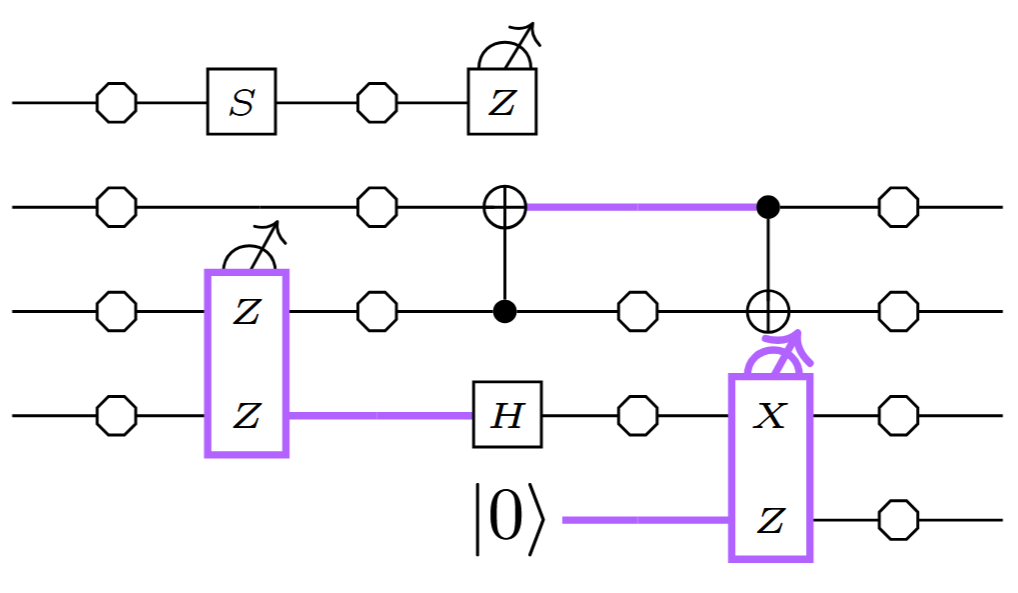
Pauli error models
Ex: sub-models, where we remove some basic faults to represent components we assume are noise-free:
Fault-equivalence
Definition: Two circuits (or ZX-diagrams) $C, D$ are called fault-equivalent:
$C \ \hat{=}\ D$
if for any undetectable fault $F$ of weight $w$ on $C$, there exists an undetectable fault $F'$ of weight $\leq w$ on $D$ such that $C[F] = D[F']$(and vice-versa).
Fault-equivalence
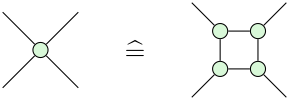
- While all the ZX rules preserve map-equivalence, only some rules preserve fault-equivalence.
- It turns out the ones that do, e.g.
...are very useful for compiling fault-tolerant circuits!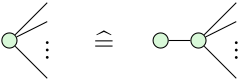
Paradigm: Fault-tolerance by construction
Idea: start with an idealised computation (i.e. specification) and refine it with fault-equivalent rewrites until it is implementable on hardware.
Specification/refinement has been used in formal methods for classical software dev since the 1970s. Why not for FTQC?
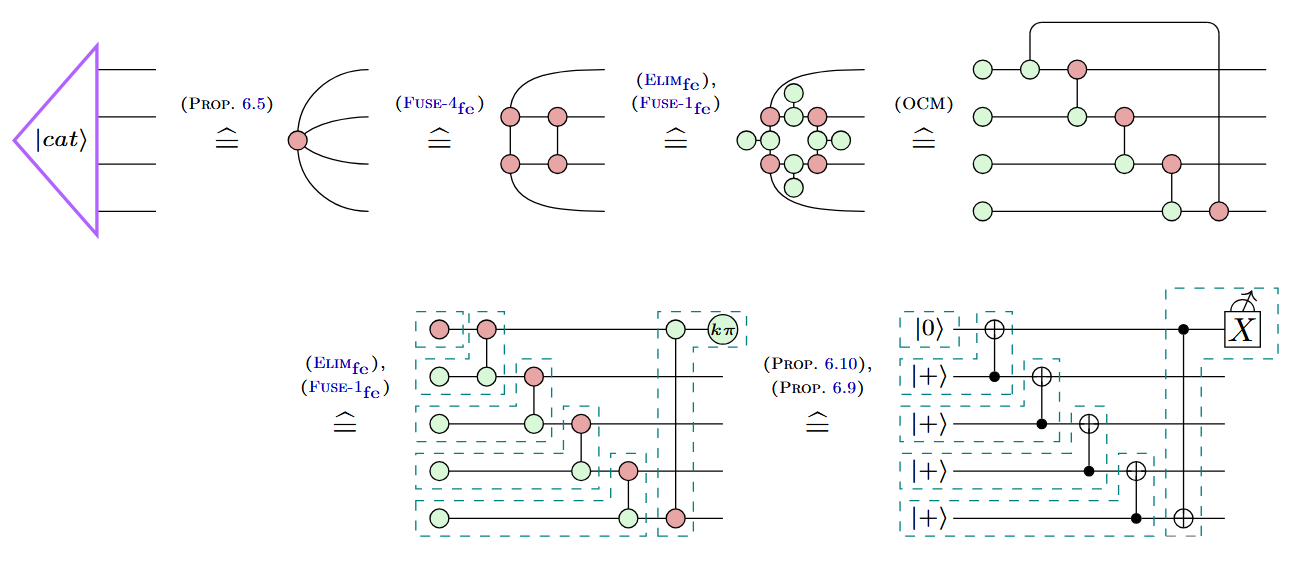
Example: Cat state preparation
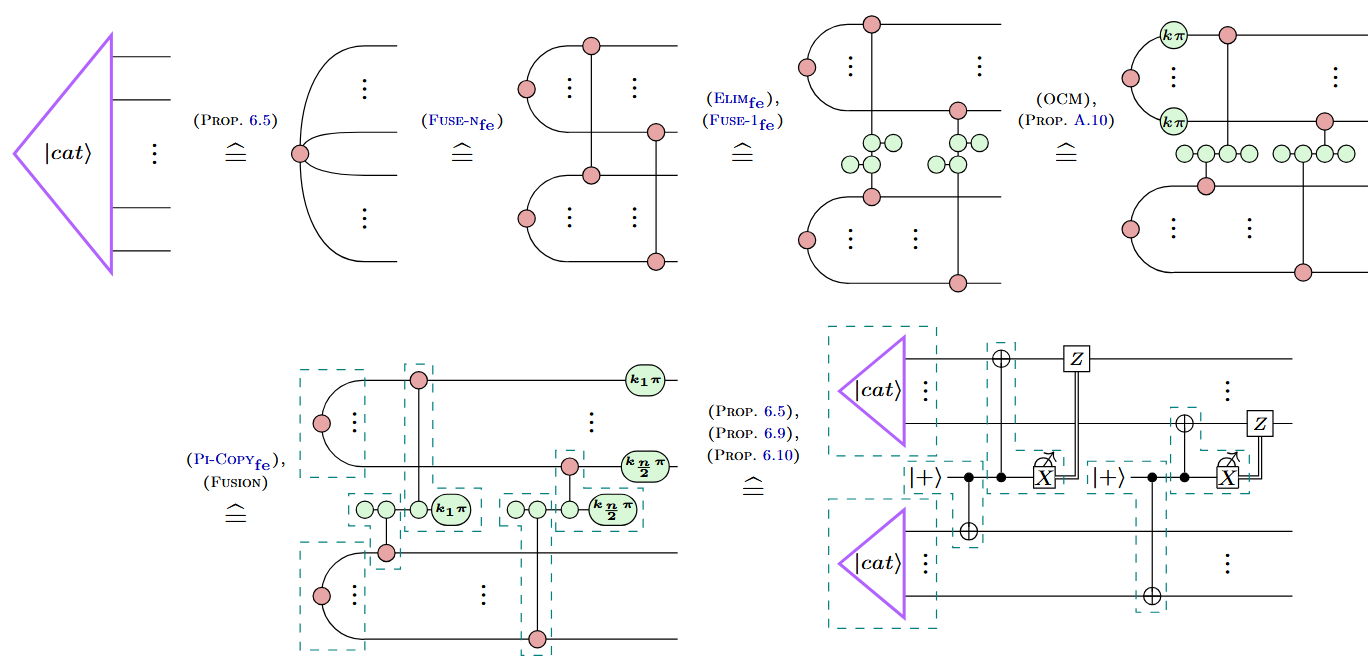
Example: Cat state preparation
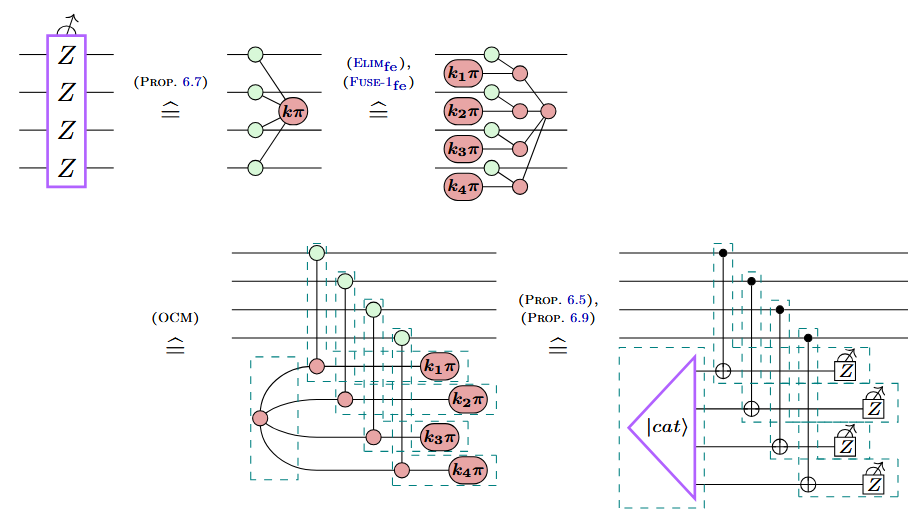
Example: Shor-style syndrome extraction
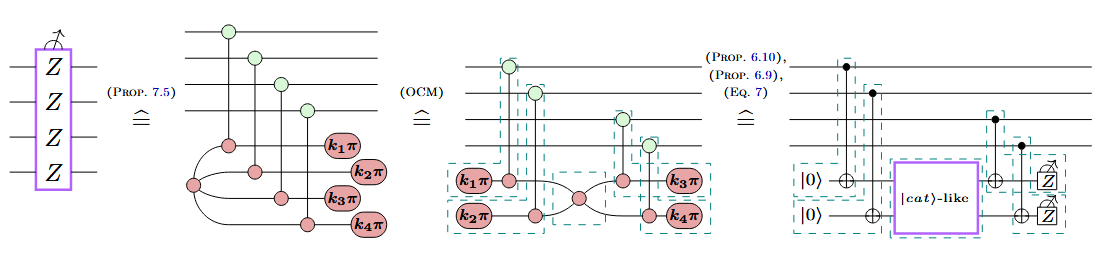
Example: A new variation on Shor
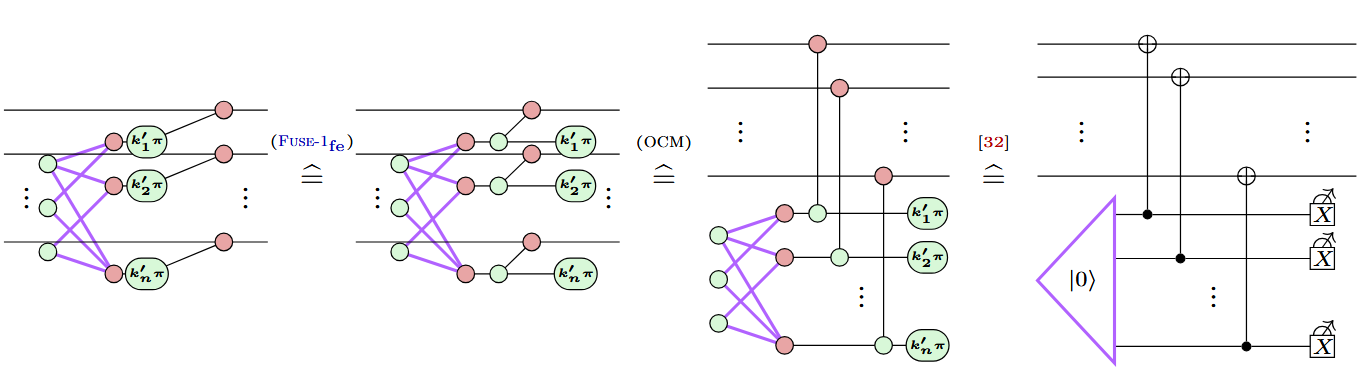
Example: Steane-style syndrome extraction
Example: A new variation on Steane (the same trick)
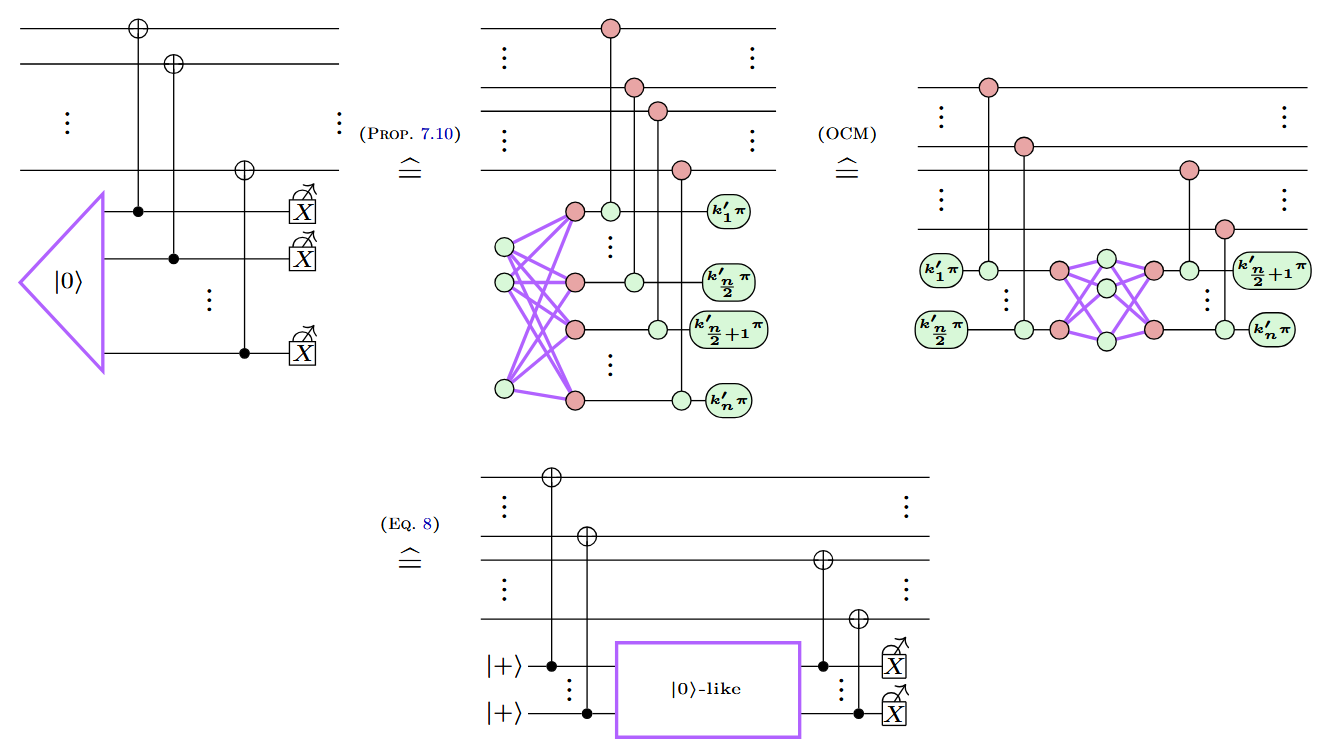
...with fewer qubits and a lower logical error rate!
FTbC Survey
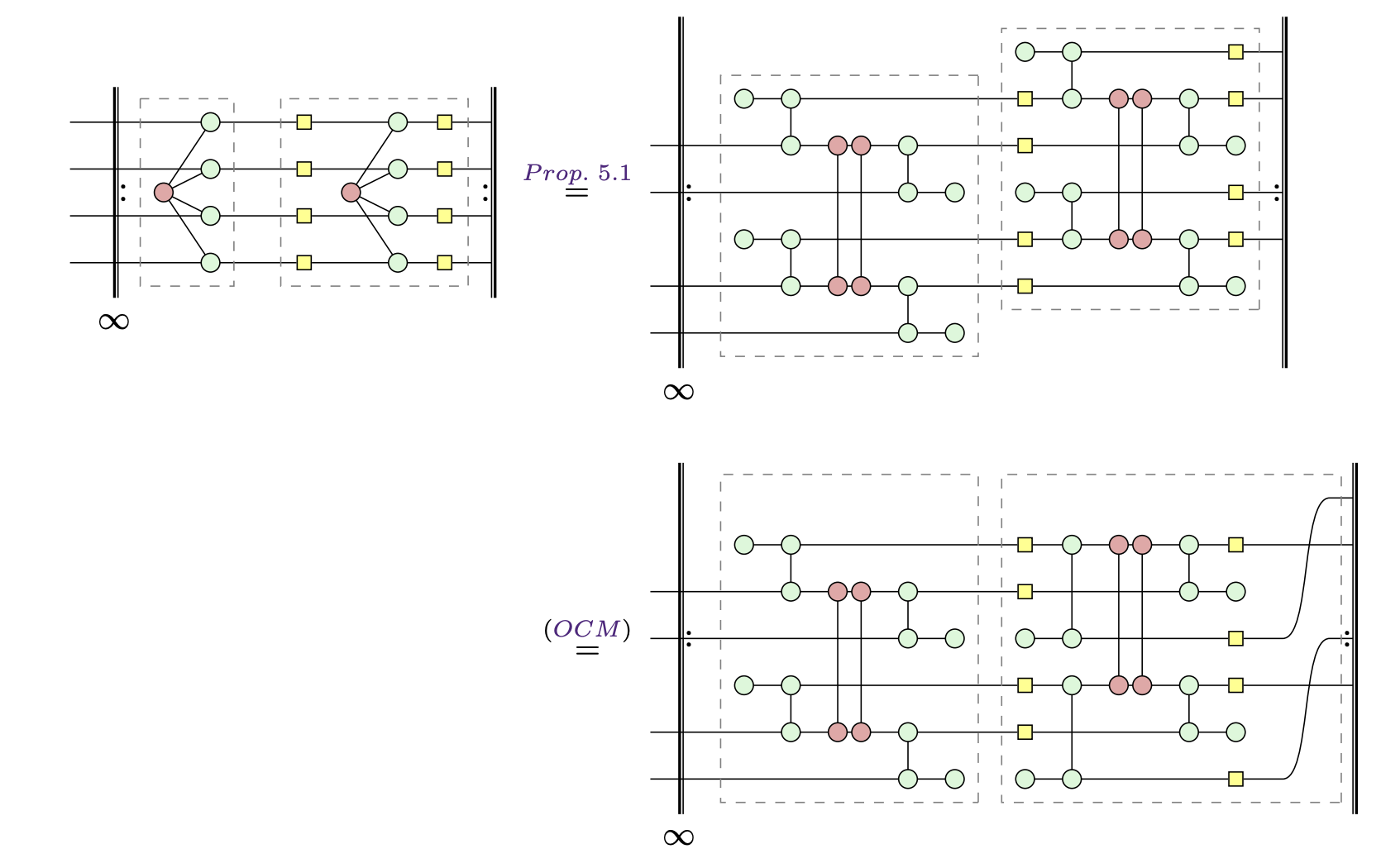
Floquetification
B Rodatz, B Poór, AK. arXiv:2410.17240
See also: A. Townsend-Teague, J. Magdalena de la Fuente, M. Kesselring. arXiv:2307.11136
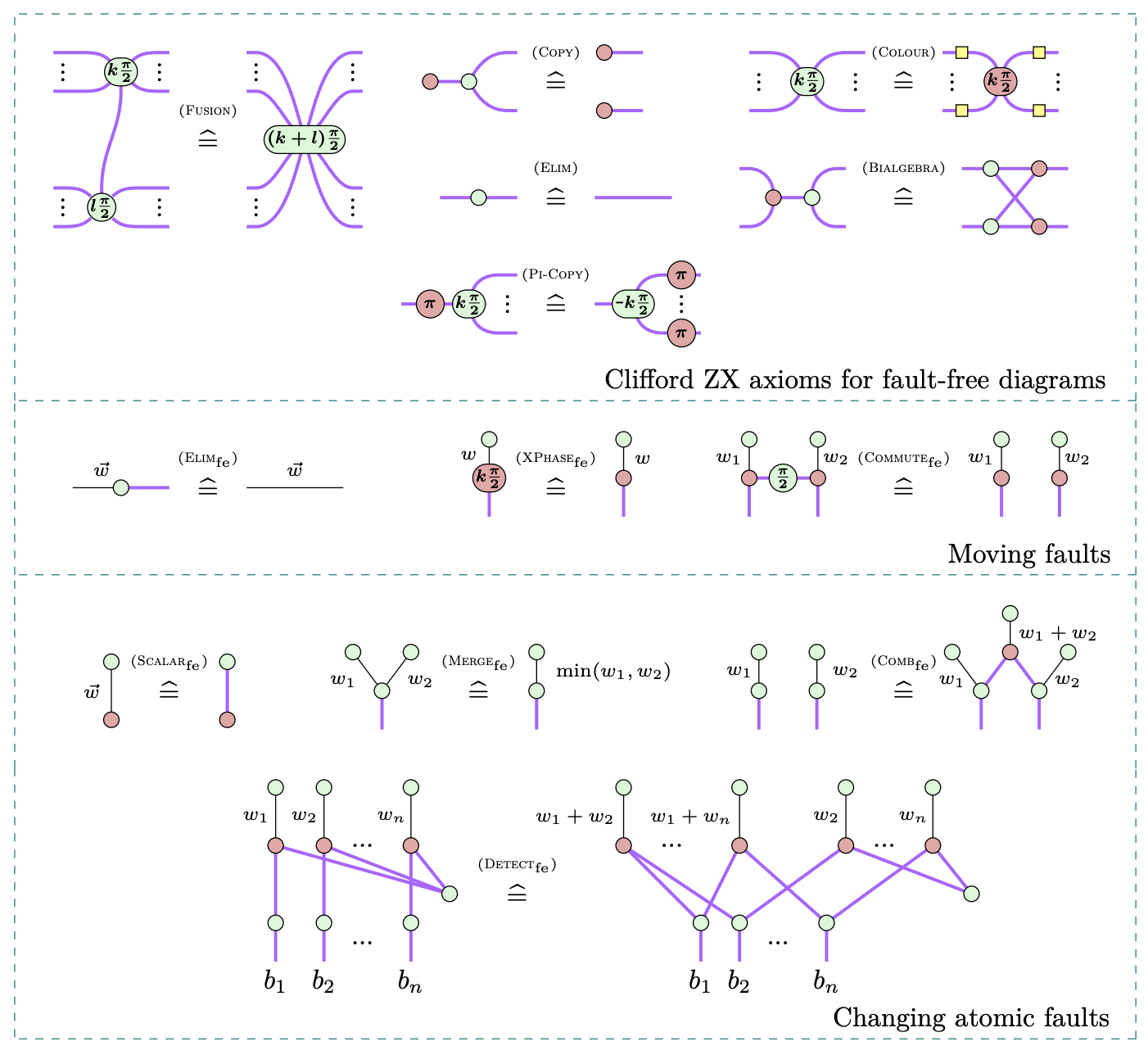
Completeness for Fault-equivalent Rewriting
M Rüsch, AK, B Rodatz. arXiv:2510.08477
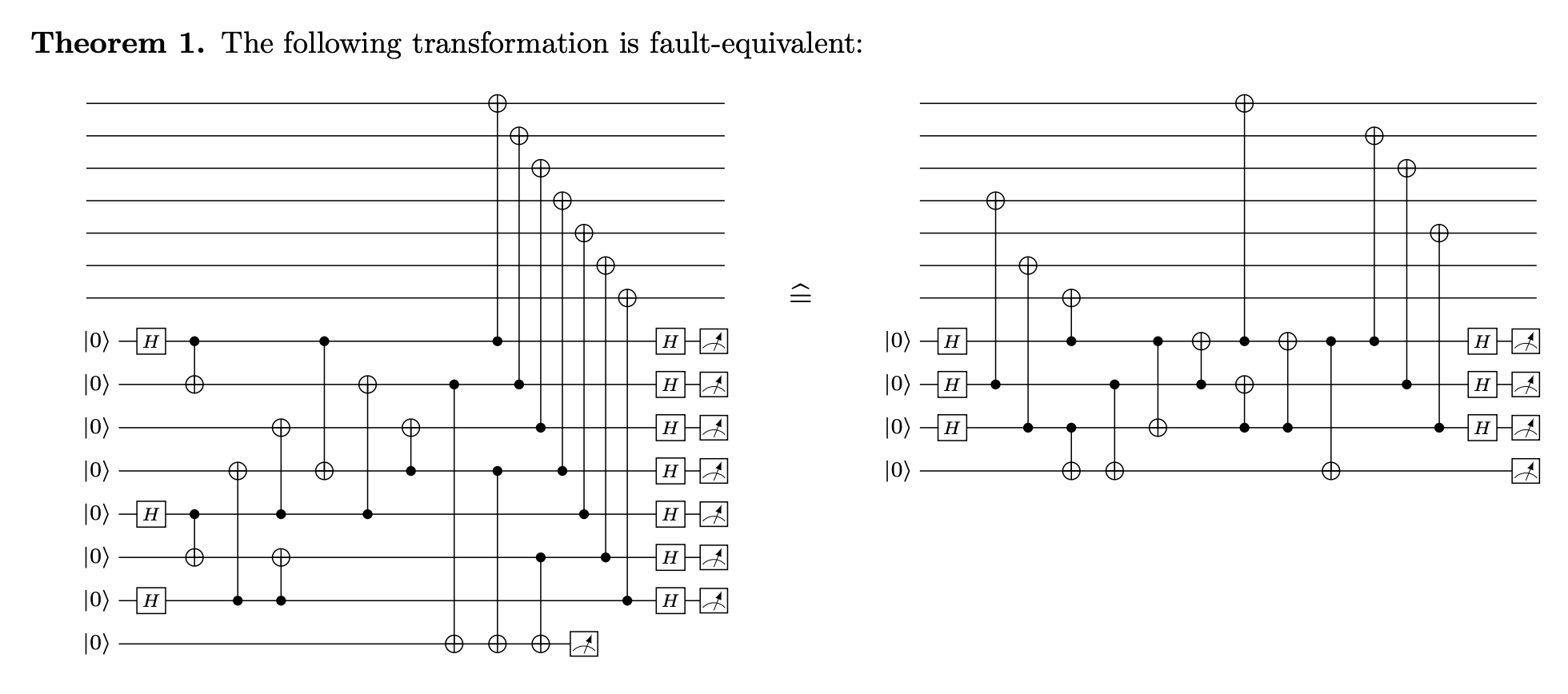
Ultra-low overhead syndrome extraction for the Steane Code
B Poór, B Rodatz, AK. arXiv:2511.13700
an 11-CNOT (optimal*) syndrome extraction circuit for the Steane code
Ultra-low overhead syndrome extraction for the Steane Code
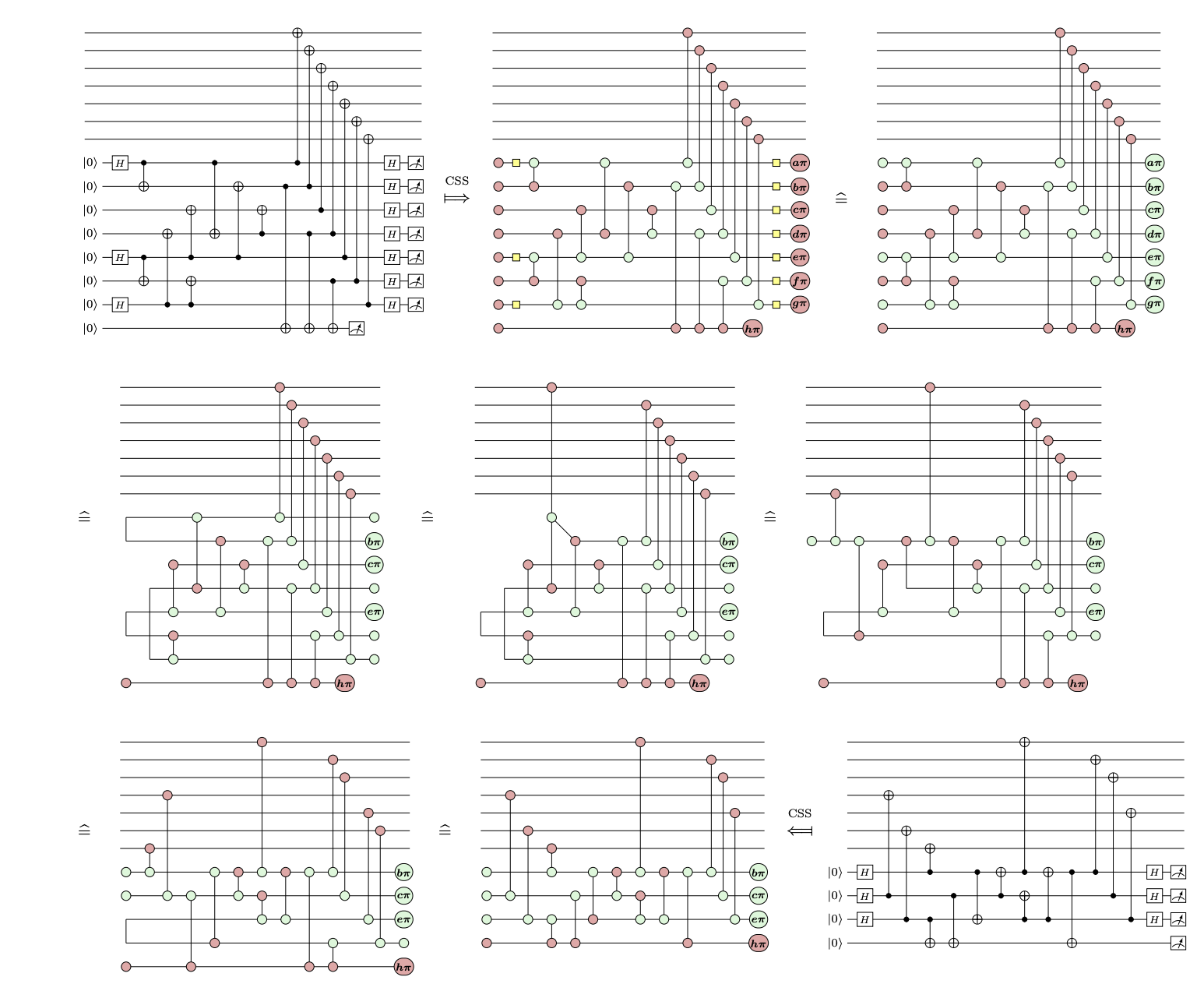
SpiderCat: Optimal FT Cat State Preparation
A Khesin, S Li, B Poór, B Rodatz, J van de Wetering, R Yeung. arXiv:2603.05391
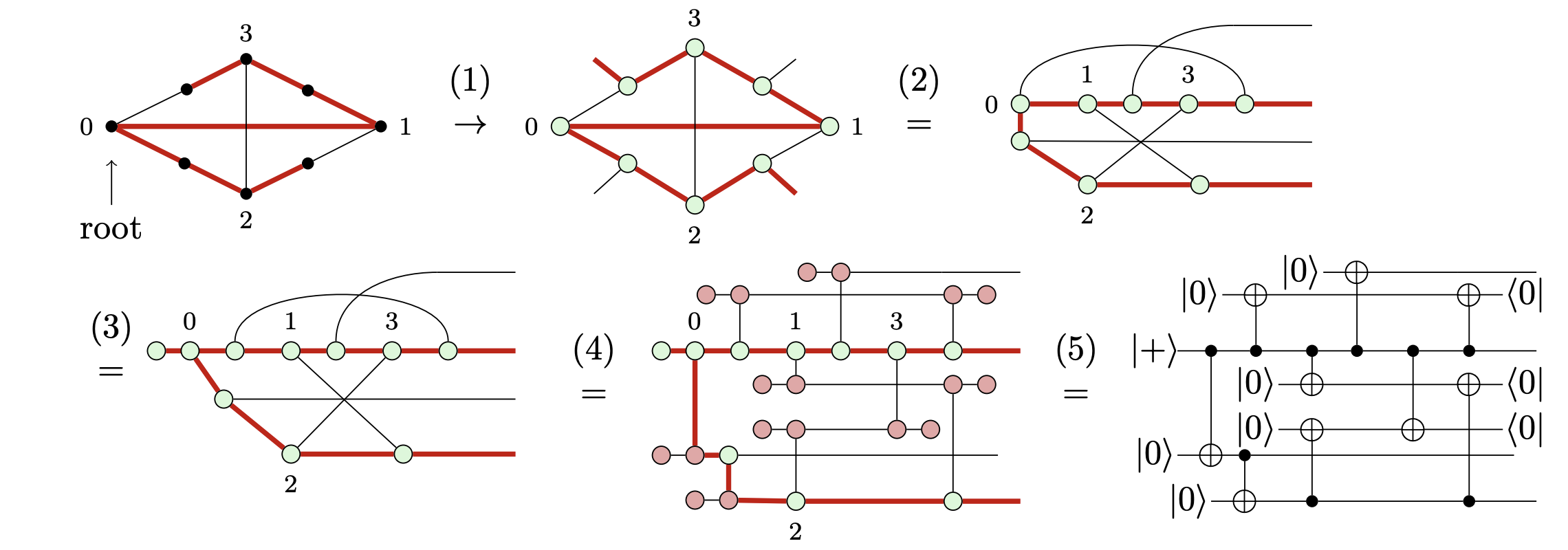
gives CNOT lower bounds for all sizes $n$ and max FT error weight $t$
+ optimal explicit constructions for most pairs
$(n \leq 100, t \leq 5)$ and $(n \leq 50, t \leq 7)$
MWPM-Decodability Preserving Rewriting
M Schweikart, L Grans-Samuelsson, AK, B Rodatz. arXiv:2603.19522

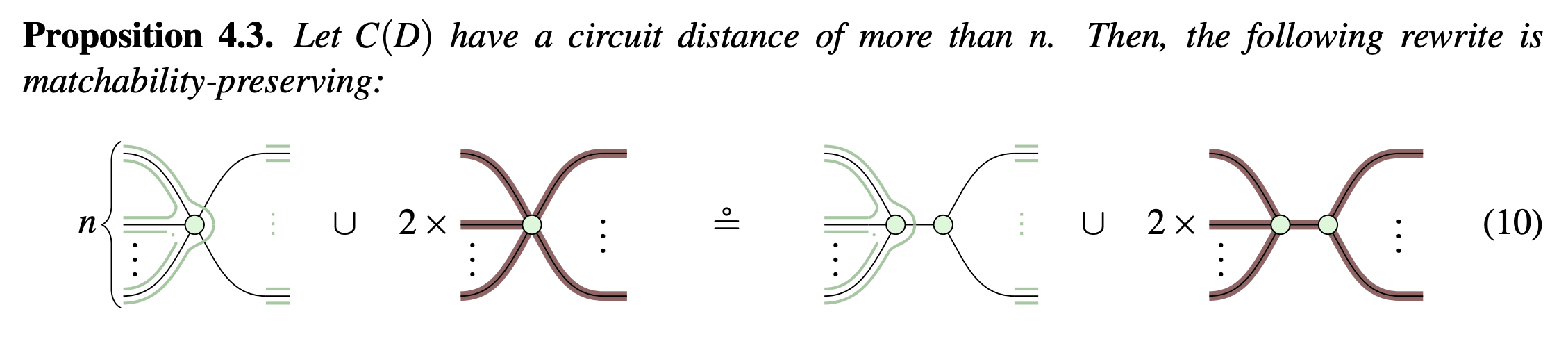
matchable QEC codes ⇒ FT syndrome extraction circuits with matchable DEMs
Lots to do!
- Automatically building/optimising FT circuits
(e.g. via heuristic search or AI)
- Logical computation and measurement
(esp. in non-traditional QEC paradigms, like dynamical codes)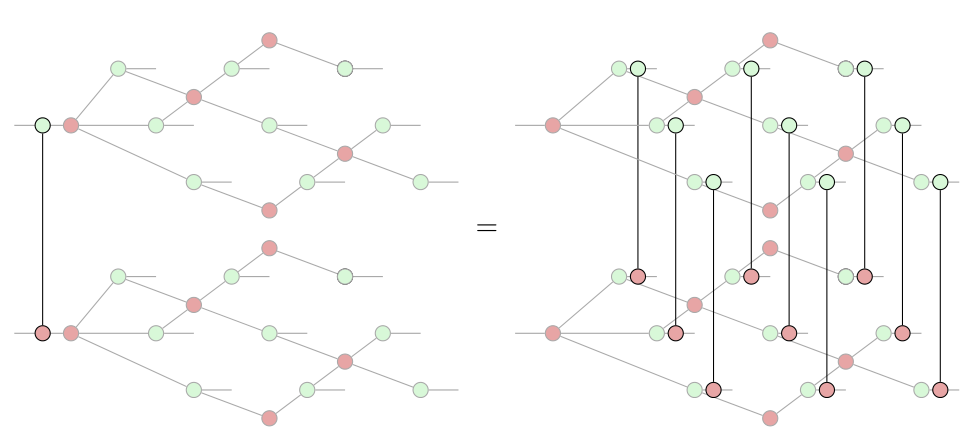
Lots to do!
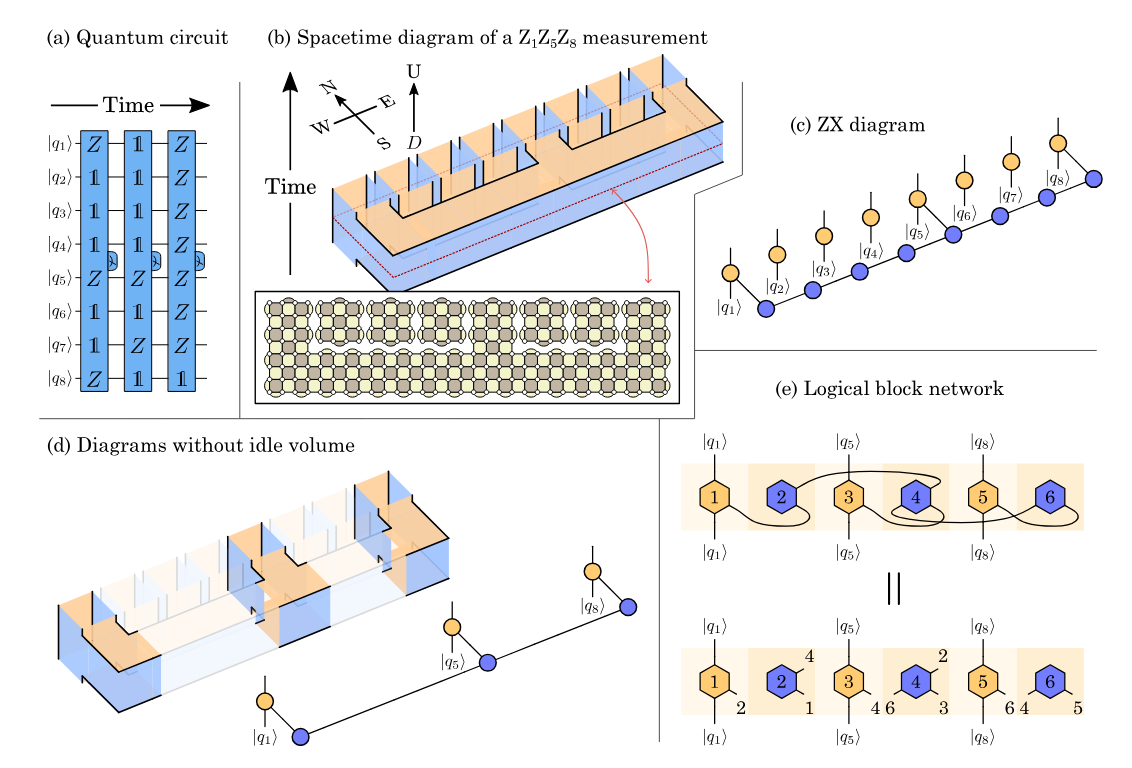
- Scalability, compositionality, and FT architectures
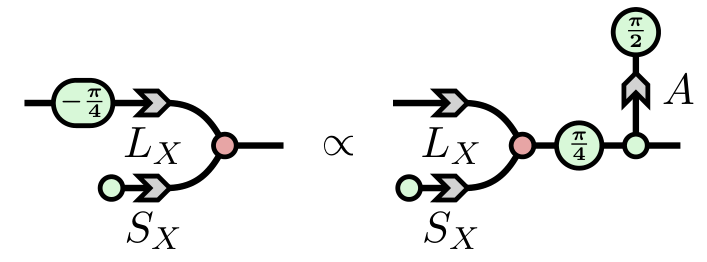
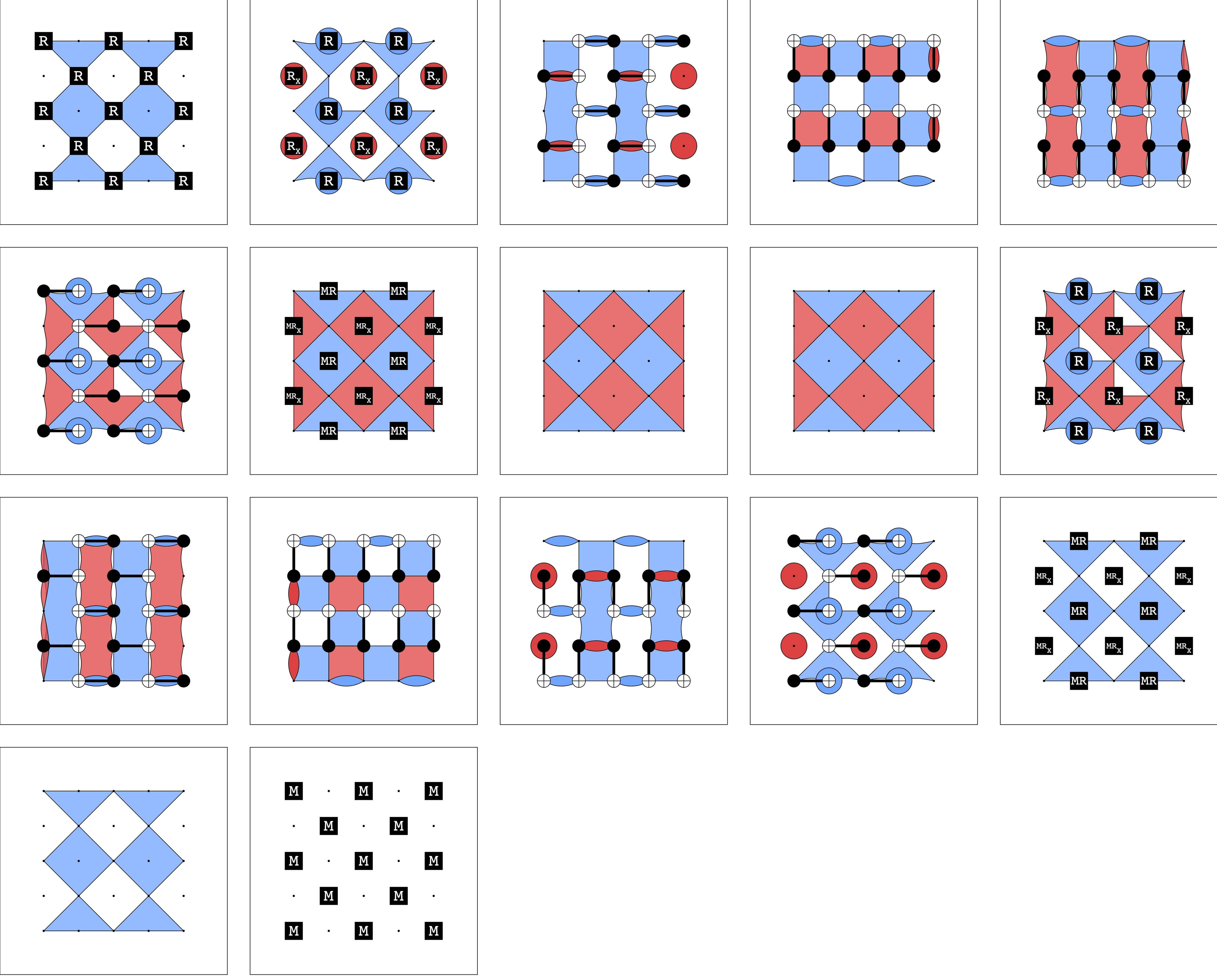
- Tooling, automation, and integration
(PyZX/QuiZX/ZXLive/Paritea/Stim)
Lots to do!
- Decoding errors and preserving efficient decodability
(beyond matchable codes/circuits)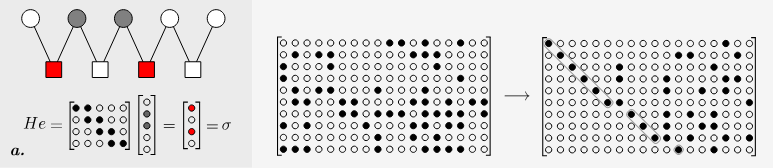
- Reasoning about stochastic noise
(fault-equiv. = adversarial/worst-case noise behaviour)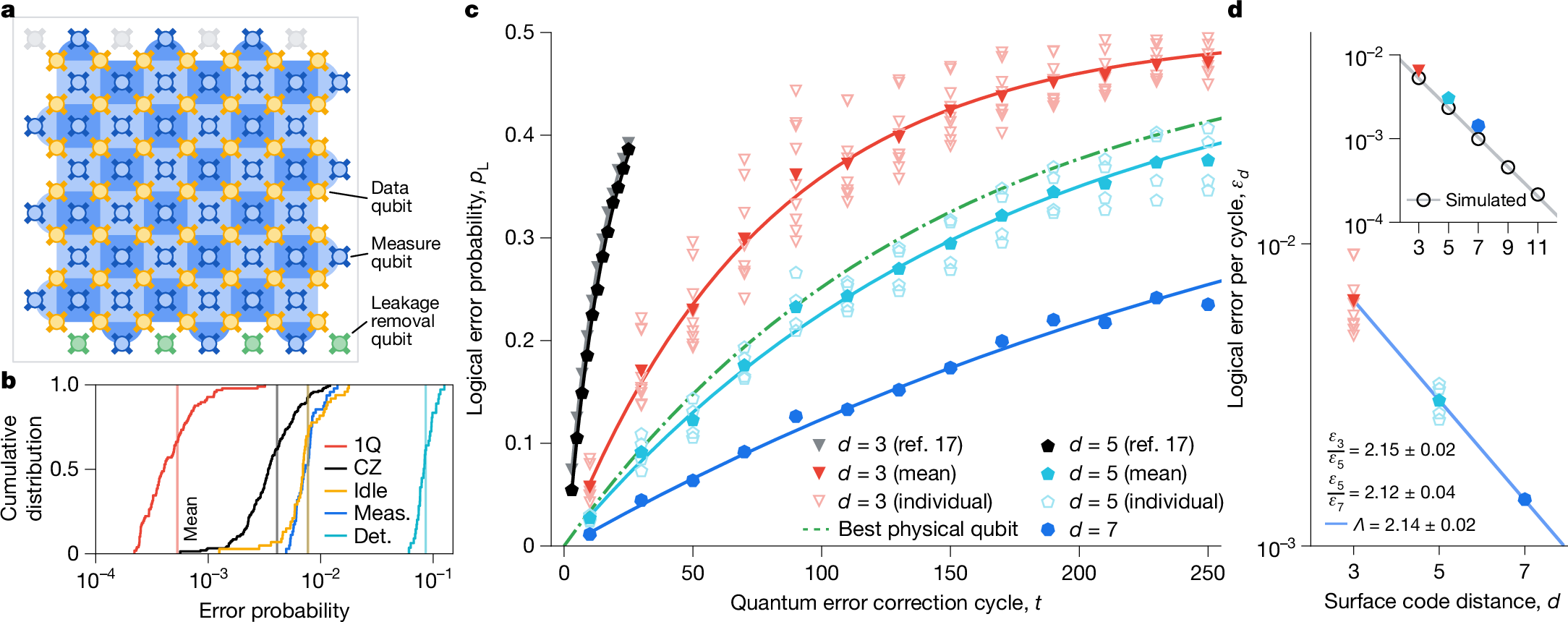
Image credit: Riverlane and Google Quantum AI
Thanks!
Fault Tolerance by Construction » arXiv:2506.17181
Collabs: Benjamin Rodatz, Boldiszár Poór, Linnea Grans-Samuelsson, Andrey Khesin, Sarah Meng Li, John van de Wetering, Richie Yeung, Max Schweikart, Max Rüsch


https://zxcalc.github.io/book
(free book! Ch 12 = ZX + QEC)
https://zxcalculus.com
(350+ ZX papers, ~10% tagged QEC, online seminars, Discord)