


From DPhil research to real-world impact: Vít Růžička advances AI detection of gas emissions
Posted: 2nd November 2026
Research begun during alumnus Dr Vít Růžička’s DPhil at Oxford is now helping NASA scientists automatically detect gas emissions in high-resolution images of the Earth.
This work builds on research Vít began during his DPhil at the department, where he explored how machine learning could identify methane leaks in imaging spectroscopy data. Methane is a significant contributor to anthropogenic climate change, and detecting individual sources can help operators identify and fix leaks quickly.
In a new paper published in Nature, Vít, now a NASA postdoctoral researcher at the Jet Propulsion Laboratory (JPL), worked with colleagues to translate this research into real-world operational use, supporting analysts in their search for gas emissions. Automating the process enables large volumes of observations to be analysed more efficiently, helping researchers identify potential emissions at scale.
The researchers have also expanded the approach beyond methane. Their methods can automatically detect emissions of nitrogen dioxide, carbon monoxide and ammonia, all of which are important for understanding air pollution and air quality.
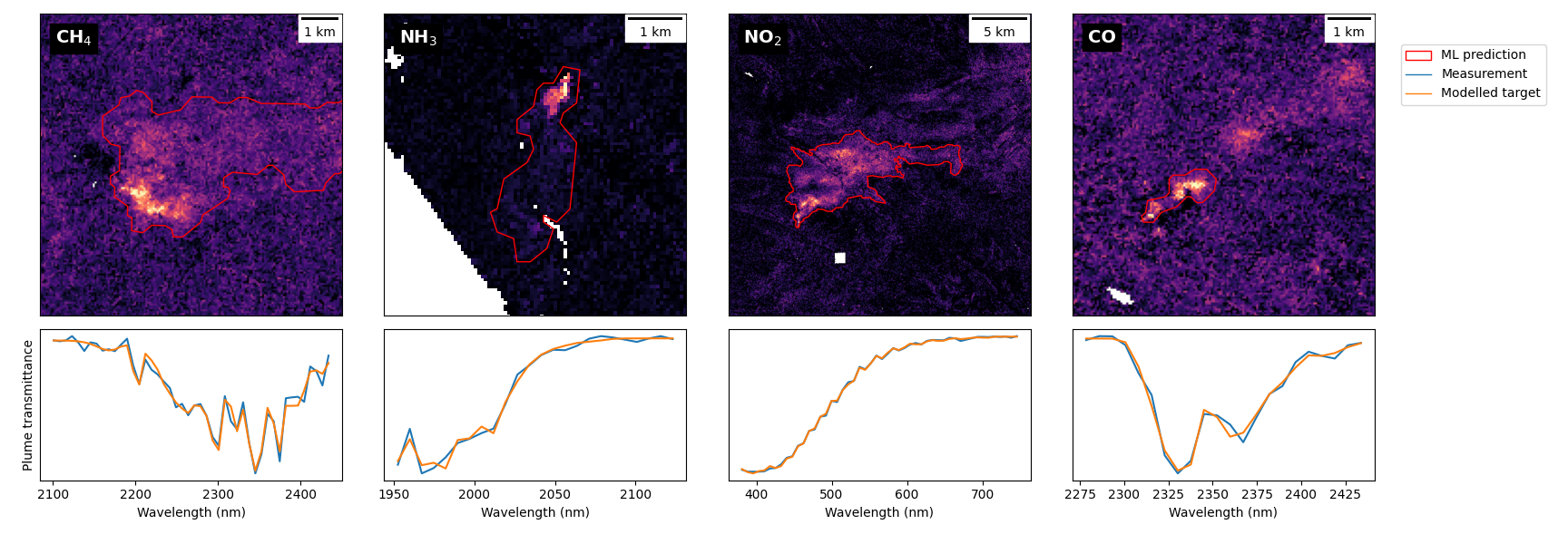
This is the first time these gases have been detected automatically in this type of high-resolution imaging spectroscopy data. Previous detections have relied on manual searches and have covered only small numbers of leaks.
High-resolution observations are particularly valuable because they can help analysts pinpoint the precise source of an emission – for example, tracing a methane plume to an individual oil and gas facility, enabling operators to investigate and potentially mitigate the leak.
The research could also make it easier to develop the next generation of machine learning tools for monitoring emissions. The team has made its code and datasets openly available, providing other researchers with examples of gas emission events in high-resolution data that were not previously available at this scale.
The work is a strong example of how research developed during a DPhil can rapidly progress into operational use. Building on ideas Vít explored at Oxford in his thesis 'Intelligent Decision Making On-Board Satellites', the technology is now being applied to real-world observations at JPL, helping analysts identify emissions and providing information that could ultimately support action on the ground.
Read the paper in Nature: https://www.nature.com/articles/s41598-026-70499-1.