


Ana Namburete
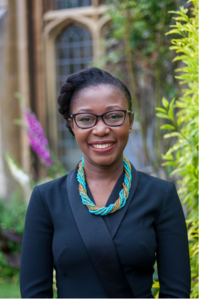
Professor Ana Namburete
Associate Professor of Computer Science
Tutorial Fellow, Pembroke College
E: ana.namburete@cs.ox.ac.uk
T: +44 (0)1865 673 868
S: Twitter
Themes:
Completed Projects:
See Also:
Interests
I am an Associate Professor at the University of Oxford in the Department of Computer Science and a Tutorial Fellow of Pembroke College. My research is on deep learning and computer vision for medical image analysis, applied to fetal and neonatal neuroimaging. Much of my time is spent developing methods for quantifying brain development from ultrasound, and making those methods work in the low-resource clinical settings where they are most needed. I have worked on problems that include 3D brain reconstruction from freehand 2D ultrasound, atlas construction, subcortical and cortical segmentation, domain adaptation for neuroimaging harmonisation, and neurodevelopmental biomarker discovery.
Biography
Ana Namburete is Associate Professor of Health Data Science and Artificial Intelligence at the University of Oxford, and Rokos Tutorial Fellow of Computer Science at Pembroke College. She leads a research group focused on machine learning for fetal and neonatal neuroimaging, with the aim of making quantitative assessment of the developing brain accessible in the under-resourced clinical settings where maternal and fetal care is most needed.
She studied biomedical engineering at Simon Fraser University (Canada) on a W. Ronald Heath International Scholarship, graduating First Class with Distinction, before completing her DPhil in Engineering Science at Oxford on a Commonwealth Scholarship under the supervision of Professor Alison Noble OBE FRS. Following her doctoral work she was awarded a Royal Academy of Engineering Research Fellowship (2016–2022), which established her independent research programme in AI-based fetal neuroimaging.
Her group builds machine learning tools that extract quantitative biomarkers of neurodevelopmental maturation from routine fetal ultrasound: information that lies beyond the reach of conventional clinical assessment but is measurably predictive of long-term outcomes. Ultrasound is central to her work because it is safe, portable, and deployable in low-income settings. A landmark paper in Nature (2023) established the first normative spatiotemporal atlas of fetal brain maturation, linking regional developmental trajectories to neurodevelopmental outcomes at two years of age. Her group's open-source OMNI Fetal Brain Ultrasound Toolkit, which automates fetal brain segmentation and volumetric analysis from 3D ultrasound, is now in active use at research centres worldwide. She has published more than 70 papers.
Her research is supported by an ERC Starting Grant (WOMB2COT, 2026), the Bill and Melinda Gates Foundation, EPSRC, and the Academy of Medical Sciences, representing more than £10.5M in total funding as principal investigator. Her Gates Foundation programme focuses specifically on applying AI-based brain assessment in low-income countries. She has been invited to deliver keynote lectures at the international FIT'NG Conference on Fetal, Infant, and Toddler Neuroimaging and the MICCAI PIPPI Workshop, and has given invited talks at Harvard Medical School, the Royal Statistical Society, the Norwegian University of Science and Technology, and Microsoft Research, among others.
She serves on the Board of the Africa-Oxford Initiative (AfOx), the Board of Trustees of the Hertie Institute for AI in Brain Health at the University of Tübingen, and the Governing Body of Pembroke College, Oxford. At Oxford she proposed and introduced the Deep Learning in Healthcare course and re-established Computer Science at Pembroke College after a twenty-year hiatus. She is committed to public engagement: in 2023 she was a Featured Scientist in the BBC Royal Institution Christmas Lectures, one of the UK's most celebrated science communication programmes.
Further information about the group and its research is available here.